
Terracotta Pot Sizes Guide (2026): Complete Dimensions & Size Chart
Discover the complete terracotta pot size guide with professional dimensions charts, soil capacity data, plant-by-plant size recommendations, root development principles, and wholesale buying advice from Terrachi Clay. Whether you are a home gardener choosing your first clay planter, a landscape architect specifying sizes for a commercial project, or a wholesale buyer sourcing coordinated collections, this guide explains exactly how to select the right terracotta pot size for long-term plant performance.
Quick Answer: What Size Terracotta Pot Do I Need?
For most plants, select a terracotta pot approximately 5–10 cm (2–4 inches) larger in diameter than the existing root ball. Herbs grow well in 15–20 cm (6–8 inch) terracotta pots, flowering plants in 20–30 cm (8–12 inch) pots, shrubs in 35–50 cm (14–20 inch) planters, and olive or citrus trees in 60–90 cm (24–36 inch) terracotta containers. Always consider the plant's mature root system rather than its current nursery container size. Use our complete terracotta pot size chart below for exact dimensions, soil capacity, and plant matching.
Introduction to Terracotta Pot Sizing
Terracotta has been used for container gardening for thousands of years because it combines natural durability, timeless beauty, and excellent growing performance. While decorative appearance often influences purchasing decisions, the correct terracotta pot size has a far greater impact on plant health, growth rate, and flowering than colour, finish, or ornamentation.
Every container plant depends on the micro-environment created inside its planter. Soil volume determines how much water and nutrients are available to the root system. Internal dimensions influence root expansion and anchoring. Drainage controls oxygen availability, while the natural breathability of fired clay helps regulate moisture around the roots — a characteristic that plastic and ceramic containers cannot replicate.
Choosing the wrong terracotta pot size can lead to unnecessary watering, poor root development, reduced flowering, slower growth, and in severe cases, plant death. Conversely, selecting the correct terracotta planter allows roots to establish naturally, improves structural stability, reduces maintenance, and extends the intervals between repotting.
Unlike many online articles that simply recommend buying a slightly larger pot, this guide explains the science, engineering, and commercial considerations behind terracotta planter sizing. It combines horticultural knowledge with practical manufacturing experience to help home gardeners, retailers, landscape designers, and wholesale buyers make better, data-driven decisions.
Why Pot Size Matters for Plant Health
The size of a terracotta pot influences nearly every aspect of plant growth. Roots require sufficient space to absorb water, collect nutrients, and anchor the plant securely. When the container is too small, roots become restricted and eventually begin circling around the inside wall of the pot — a condition known as being "root bound."
Root restriction affects the entire plant system. Water dries more quickly in a small soil volume, nutrient availability decreases as roots exhaust the limited compost, and growth gradually slows. Flowers may become smaller, leaves less vigorous, and overall plant health declines over time. In terracotta pots, this problem is amplified because the porous clay walls draw additional moisture away from the soil.
Oversized containers can also create serious problems. A small root ball surrounded by excessive amounts of wet compost often remains saturated for extended periods. This reduces oxygen around the roots and increases the likelihood of root rot, fungal diseases, and nutrient leaching. The key is finding the right balance — enough space for healthy root expansion without so much excess soil that moisture becomes unmanageable.
🏭 Manufacturer Insight
Professional terracotta manufacturers never choose planter dimensions purely for appearance. Diameter, height, wall thickness, and drainage hole size are engineered together to create a balanced product that supports healthy plant growth while remaining structurally stable during transport and long-term outdoor use. A 40 cm pot designed for olive trees has different wall thickness, base width, and drainage specifications than a 40 cm pot designed for patio flowers.
Benefits of Choosing the Correct Pot Size
- Healthier, more extensive root development with less circling.
- Improved water retention without excessive saturation or rapid drying.
- Greater nutrient availability and reduced fertiliser requirements.
- Reduced transplant shock when moving between containers.
- Better resistance to heat stress during summer months.
- Improved structural stability for larger, top-heavy plants.
- Longer intervals between repotting — often 2–3 years instead of annually.
- More balanced overall plant growth, flowering, and fruiting.
💡 Professional Tip
When selecting a new terracotta planter, think about where the plant will be in two to three growing seasons rather than how large it is today. Planning for future growth reduces transplant stress, minimises root disturbance, and creates a healthier long-term growing environment. For fast-growing species like tomatoes or bamboo, size up by one full category rather than the minimum increment.
How Terracotta Pots Are Measured
Across the international pottery industry, terracotta planters are usually identified by their top diameter. A product described as a 40 cm terracotta pot refers to the external diameter measured across the rim. In the United States, this is commonly expressed in inches — a 40 cm pot is approximately 16 inches in diameter.
While diameter is the most common specification consumers see, professional buyers and landscape architects evaluate several additional measurements before placing an order. Understanding these dimensions ensures you select a planter that matches both the plant's needs and the physical space available.
| Measurement | Description | Why It Matters |
|---|---|---|
| Top Diameter | Width across the opening at the rim. | Primary sizing reference used by all manufacturers. |
| Overall Height | Base to rim measurement. | Determines rooting depth and vertical space requirements. |
| Base Diameter | Width of the bottom foot or base. | Influences stability, especially for tall plants and windy locations. |
| Internal Depth | Usable planting depth from soil surface to drainage. | Controls root development depth and drainage efficiency. |
| Soil Capacity | Approximate volume of growing media in litres. | Determines water and nutrient storage capacity. |
| Empty Weight | Weight before planting with soil and plant. | Critical for handling, freight planning, and balcony load limits. |
| Drainage Hole Size | Opening beneath the planter for water exit. | Controls water removal speed and root aeration. |
| Wall Thickness | Thickness of the terracotta wall. | Affects durability, insulation, and moisture regulation. |
Professional landscape architects and commercial buyers often request complete dimensional drawings because two pots with identical diameters may differ significantly in height, internal volume, and planting capacity. For example, a shallow bowl-shaped 40 cm planter may hold only 15 litres of soil, while a standard cylindrical 40 cm pot holds 22–25 litres — a difference of over 60% in growing capacity.
⚠ Common Buying Mistake
Do not compare terracotta pots using diameter alone. Two planters measuring 40 cm across the rim can hold very different volumes of soil depending on their height, wall thickness, and internal profile. Always check the soil capacity in litres and internal depth before purchasing, especially for deep-rooting plants like roses, tomatoes, and olive trees.
Standard Terracotta Pot Size Categories
Although manufacturers produce hundreds of different planter designs, most terracotta pots fall into five broad size categories. Understanding these categories provides a useful starting point before comparing detailed dimensions, soil capacities, and specific plant requirements.
| Category | Diameter (cm) | Diameter (inches) | Typical Applications |
|---|---|---|---|
| Extra Small | 10–15 cm | 4–6" | Succulents, seedlings, cactus, propagation, small herbs. |
| Small | 15–25 cm | 6–10" | Herbs, indoor plants, annual flowers, patio bedding. |
| Medium | 25–40 cm | 10–16" | Vegetables, roses, shrubs, patio planting, compact trees. |
| Large | 40–60 cm | 16–24" | Citrus trees, olive trees, mature shrubs, feature plants. |
| Extra Large | 60 cm and above | 24"+ | Commercial landscaping, hospitality projects, specimen trees, architectural planting. |
Selecting the correct category provides a useful starting point, but always verify the specific dimensions and soil capacity of individual products before purchasing. Within the "Medium" category alone, soil capacity ranges from approximately 6 litres (25 cm) to 25 litres (40 cm) — a fourfold difference that significantly impacts watering frequency and plant performance.
The Complete Terracotta Pot Size Chart
The following chart summarises the most common terracotta planter sizes used throughout the gardening and horticultural industry. Actual dimensions vary slightly between manufacturers because terracotta is a natural fired clay product and minor variations are part of authentic craftsmanship. All measurements are approximate and intended as a general guide.
| Diameter | Approx. Height | Soil Capacity | Weight (Empty) | Typical Uses |
|---|---|---|---|---|
| 10 cm (4") | 9 cm | 0.5 L | 0.3 kg | Seedlings, succulents, cactus, propagation trays. |
| 12 cm (5") | 11 cm | 0.8 L | 0.5 kg | Small herbs, young plants, alpine displays. |
| 15 cm (6") | 13 cm | 1.5 L | 0.8 kg | Basil, thyme, parsley, small indoor plants, kitchen windowsill. |
| 20 cm (8") | 18 cm | 3.5 L | 1.5 kg | Annual flowers, patio plants, geraniums, small perennials. |
| 25 cm (10") | 22 cm | 6–8 L | 2.5 kg | Houseplants, herbs, decorative planting, small shrubs. |
| 30 cm (12") | 26 cm | 10–12 L | 4 kg | Vegetables, roses, flowering shrubs, compact fruit bushes. |
| 35 cm (14") | 30 cm | 15–18 L | 6 kg | Shrubs, compact ornamental trees, dwarf conifers. |
| 40 cm (16") | 34 cm | 22–25 L | 8.5 kg | Hydrangeas, young citrus, feature planting, medium shrubs. |
| 50 cm (20") | 42 cm | 40–45 L | 14 kg | Olive trees, mature shrubs, small specimen trees. |
| 60 cm (24") | 50 cm | 65–70 L | 22 kg | Landscape projects, mature citrus, medium ornamental trees. |
| 80 cm (32") | 65 cm | 130 L+ | 45 kg | Commercial installations, hospitality landscaping, large specimen trees. |
| 100 cm (40") | 80 cm | 240 L+ | 75 kg | Large specimen trees, architectural planting, commercial entrances. |
🏭 Manufacturer Insight
Professional manufacturers usually design coordinated collections rather than isolated planter sizes. A complete range may progress from 20 cm to 100 cm while maintaining consistent proportions, rim styles, and colour finishes. This allows retailers and landscape designers to build visually balanced planting displays where every pot looks like it belongs to the same family, even at dramatically different scales.
Terracotta Pot Size Conversion: Centimetres to Inches
For US buyers more familiar with imperial measurements, here is a quick reference conversion:
| Metric (cm) | Imperial (inches) | Soil (litres) | Soil (US gallons) |
|---|---|---|---|
| 10 cm | 4" | 0.5 L | 0.13 gal |
| 15 cm | 6" | 1.5 L | 0.4 gal |
| 20 cm | 8" | 3.5 L | 0.9 gal |
| 25 cm | 10" | 7 L | 1.8 gal |
| 30 cm | 12" | 11 L | 2.9 gal |
| 35 cm | 14" | 16 L | 4.2 gal |
| 40 cm | 16" | 23 L | 6.1 gal |
| 50 cm | 20" | 42 L | 11.1 gal |
| 60 cm | 24" | 67 L | 17.7 gal |
| 80 cm | 32" | 130 L | 34.3 gal |
| 100 cm | 40" | 240 L | 63.4 gal |
Why Soil Capacity Matters More Than Diameter
Diameter tells only part of the story. The amount of usable growing media inside the planter — measured in litres or gallons — determines how much water, oxygen, and nutrients are available to the root system. This is why professional growers and landscape architects prioritise soil capacity over rim diameter when specifying containers.
For example, two terracotta pots measuring 40 cm across the rim may hold very different soil volumes because of differences in height, wall thickness, or internal shape. A shallow, wide bowl might hold only 15 litres, while a standard cylindrical pot of the same diameter holds 22–25 litres. For a deep-rooting plant like a rose or citrus tree, that difference determines whether the plant thrives or struggles.
Key Benefits of Greater Soil Capacity
- Improved moisture stability — larger soil volumes resist rapid drying and temperature swings.
- Reduced watering frequency — a 50 cm pot with 45 litres of soil may need watering only once per week in summer, while a 20 cm pot with 3.5 litres may need daily attention.
- Stronger root development — additional growing media supports more extensive, healthier root systems.
- Greater nutrient reserves — more compost holds more fertiliser and organic matter.
- Temperature buffering — increased soil volume buffers against rapid temperature fluctuations that stress roots.
💡 Professional Tip
When comparing premium terracotta planters, always ask for approximate soil capacity in litres in addition to the external dimensions. Commercial buyers and professional growers often consider this the single most useful specification after diameter. For US buyers, request the capacity in US gallons as well — 1 litre equals approximately 0.264 US gallons.
Recommended Terracotta Pot Sizes by Plant Type
Every plant species develops a unique root system with different depth, spread, and density requirements. Selecting the appropriate terracotta planter size improves long-term growth, reduces stress, and creates healthier container gardens. The following table matches common plants to their ideal terracotta pot sizes based on mature root development.
| Plant | Recommended Pot Size | Soil Volume | Key Considerations |
|---|---|---|---|
| Succulents | 10–15 cm (4–6") | 0.5–1.5 L | Prefer shallow, fast-draining containers. Avoid deep pots. |
| Cacti | 10–20 cm (4–8") | 0.5–3.5 L | Excellent drainage essential. Use cactus compost with added grit. |
| Basil | 15–20 cm (6–8") | 1.5–3.5 L | Ideal for kitchen gardens. Harvest regularly to prevent flowering. |
| Mint | 20–30 cm (8–12") | 3.5–12 L | Vigorous root system benefits from additional space. Can become invasive. |
| Lavender | 25–35 cm (10–14") | 6–18 L | Requires excellent drainage and lean, alkaline soil. Terracotta is ideal. |
| Geraniums | 20–30 cm (8–12") | 3.5–12 L | Suitable for patio displays. Deadhead regularly for continuous flowering. |
| Tomatoes | 35–45 cm (14–18") | 15–30 L | Large soil volume significantly improves yield and fruit quality. |
| Roses | 40–50 cm (16–20") | 22–45 L | Deep-rooting plants requiring generous soil depth and good drainage. |
| Hydrangeas | 40–50 cm (16–20") | 22–45 L | Additional soil volume supports flowering and moisture retention. |
| Lemon Trees | 50–70 cm (20–28") | 45–90 L | Suitable for long-term container growing. Requires acidic compost. |
| Olive Trees | 60–90 cm (24–36") | 65–180 L | Traditional pairing with handmade terracotta. Deep, wide roots. |
| Japanese Maple | 60–80 cm (24–32") | 65–130 L | Requires consistent moisture and stable rooting conditions. |
| Palm Trees | 70–100 cm (28–40") | 90–240 L | Popular for hotels, resorts, and commercial landscaping projects. |
When Should You Move to a Larger Terracotta Pot?
Repotting is a normal part of plant development. As roots expand, they eventually occupy all available space within the container. Recognising the signs early prevents stress and allows for a smooth transition to a larger planter.
Common Signs It Is Time to Increase Pot Size
- Roots emerging through drainage holes or visible on the soil surface.
- Water passing straight through the compost without being absorbed.
- Soil drying unusually quickly, requiring more frequent watering.
- Reduced flowering, smaller blooms, or slower overall growth.
- The plant becoming unstable or top-heavy in its current container.
- Visible root circling around the inside of the pot when removed.
- Soil level dropping as organic matter decomposes and compacts.
⚠ Avoid Oversizing When Repotting
Moving directly from a small nursery pot into an extremely large planter often keeps the surrounding compost wet for too long. Professional growers usually increase container size gradually — moving up by one size category at a time (e.g., from 20 cm to 25 cm, not 20 cm to 40 cm). This allows the root system to colonise fresh soil before moving to the next size, preventing waterlogging and root rot.
Best Time to Repot
The optimal time to repot most plants is in early spring, just before the active growing season begins. This timing allows roots to establish in fresh compost before the plant directs energy into leaf and flower production. Avoid repotting during winter dormancy or mid-summer heat stress unless absolutely necessary.
How to Choose the Correct Terracotta Pot Size
Selecting the correct planter is a balance between horticultural science, aesthetics, and long-term maintenance. Professional growers rarely select containers based on appearance alone. Instead, they evaluate the plant's mature root system, expected growth rate, watering requirements, and the environment in which the planter will be used.
The following framework is used by professional growers, landscape architects, and commercial planting specialists when selecting terracotta planters. Following these steps ensures you choose a container that supports healthy growth for years.
🏭 Professional Selection Framework
- Identify the plant species — research its mature root spread, depth, and growth habit.
- Determine the mature root spread — this is your baseline for minimum pot diameter.
- Estimate growth over the next 2–5 years — fast-growing species need more headroom.
- Evaluate watering frequency — busy gardeners benefit from larger soil volumes.
- Consider sunlight and climate — hot, dry climates favour larger pots with more moisture reserve.
- Select the smallest pot that comfortably supports long-term root development — avoid both under- and over-sizing.
Quick Decision Matrix
| Plant Type | Indoor | Patio / Balcony | Garden / Landscape |
|---|---|---|---|
| Herbs & Seedlings | 10–15 cm | 15–20 cm | 20–25 cm |
| Flowering Annuals | 15–20 cm | 20–25 cm | 25–30 cm |
| Perennials & Shrubs | 25–30 cm | 30–40 cm | 40–50 cm |
| Fruit Trees (Citrus, Olive) | 40–50 cm | 50–60 cm | 60–90 cm |
| Specimen & Architectural | 50–60 cm | 60–80 cm | 80–100 cm+ |
Understanding Root Development in Terracotta
Healthy roots are the foundation of healthy plants. Every leaf, flower, and branch depends on the root system's ability to absorb water, oxygen, and nutrients from the surrounding soil. Understanding how roots behave in terracotta containers helps you make better sizing decisions.
Terracotta naturally supports superior root development because the fired clay walls remain slightly porous. Unlike plastic containers, terracotta allows moisture vapour to move through the walls, improving oxygen availability around the root zone. This "breathing" quality is one of the primary reasons terracotta has remained the preferred material for serious container gardening for centuries.
💡 Why Gardeners Prefer Terracotta Over Plastic
The natural breathability of terracotta encourages healthier root systems by reducing prolonged saturation around the roots. In plastic pots, water can only escape through the drainage hole, creating anaerobic conditions. In terracotta, moisture evaporates through the walls as well, maintaining better air-to-water ratios in the root zone. This characteristic has made terracotta one of the preferred materials for container gardening worldwide for over 5,000 years.
Stages of Root Growth in Terracotta Containers
| Stage | Root Behaviour | Recommended Action |
|---|---|---|
| Young Plant | Roots establish within fresh compost, growing outward from the root ball. | Maintain existing container size. Water lightly but consistently. |
| Developing Plant | Roots expand throughout the planter, reaching the walls and base. | Monitor watering frequency — it will increase as roots fill the pot. |
| Mature Plant | Container becomes fully occupied. Roots form a dense mat. | Prepare for repotting. Check drainage holes for emerging roots. |
| Root Bound | Roots circle the container, forming a solid mass. Growth stalls. | Increase planter size immediately. Tease out circling roots before replanting. |
How Pot Size Affects Watering Frequency
Container size has a direct and significant influence on irrigation frequency. Smaller planters dry rapidly because they contain less compost and have a higher surface-area-to-volume ratio. Larger containers store greater volumes of water and remain moist for longer periods, making them more forgiving for busy gardeners or during hot summer periods.
| Pot Size | Water Retention | Typical Watering (Summer) | Best For |
|---|---|---|---|
| 10–20 cm (4–8") | Low | Daily or twice daily in heat | Experienced gardeners, succulents, cacti |
| 25–40 cm (10–16") | Moderate | Every 2–3 days | Most home gardeners, mixed plantings |
| 50–80 cm (20–32") | High | Once per week | Busy gardeners, commercial landscapes, trees |
| 100 cm+ (40"+) | Very High | Every 10–14 days | Large specimens, architectural plantings, resorts |
⚠ Overwatering Is Often a Pot Size Problem
Many gardeners assume poor drainage causes root rot. In reality, placing a small plant inside an oversized container often leaves excess compost permanently wet, reducing oxygen around the roots and creating ideal conditions for fungal pathogens. If your plant shows signs of root rot despite having drainage holes, check whether the pot is simply too large for the root ball. The correct solution is usually a smaller pot, not more drainage.
Choosing the Right Pot Shape
Diameter is only one aspect of planter design. Shape influences rooting depth, stability, visual appearance, and even how easily a plant can be removed for repotting. Different shapes suit different plants and growing environments.
| Shape | Key Advantages | Ideal Applications | Best Plant Types |
|---|---|---|---|
| Standard Pot | Balanced proportions, versatile, stable. | General gardening, retail collections. | Most herbs, flowers, shrubs. |
| Tall Planter | Greater rooting depth, dramatic vertical presence. | Trees, deep-rooting shrubs, architectural focal points. | Olive trees, citrus, roses, bamboo. |
| Wide Bowl | Large planting surface, shallow depth, stable. | Succulents, seasonal displays, alpine gardens. | Succulents, cacti, bedding plants, bulbs. |
| Urn | Decorative focal point, classical aesthetic. | Entrances, formal gardens, heritage properties. | Topiary, feature plants, annual displays. |
| Cylinder | Modern appearance, consistent width. | Commercial landscapes, contemporary gardens. | Grasses, architectural plants, bamboo. |
| Conical / Tapered | Nesting capability, efficient shipping, classic look. | Wholesale collections, retail merchandising. | General purpose, all plant types. |
Indoor vs Outdoor Terracotta Pot Selection
The environment in which your terracotta planter will live significantly influences the optimal size and specification. Indoor and outdoor conditions create different challenges that should inform your selection.
Indoor Terracotta Pot Considerations
- Weight limits — shelves, windowsills, and furniture have load limits. A 30 cm terracotta pot with soil can weigh 8–10 kg.
- Saucer requirements — terracotta is porous; use a saucer to protect surfaces from moisture seepage.
- Humidity — indoor air is often drier; slightly larger pots help maintain soil moisture.
- Light levels — low-light indoor plants grow more slowly and need less root space.
Outdoor Terracotta Pot Considerations
- Wind resistance — outdoor planters are generally larger and heavier to resist wind. Consider pot feet or anchoring for very tall plants.
- Temperature fluctuations — larger soil volumes buffer against rapid temperature changes that stress roots.
- Drainage — outdoor pots must handle heavy rainfall. Ensure drainage holes are not blocked by sitting on flat surfaces.
- Frost resistance — high-fired terracotta (1000°C+) resists frost cracking. Avoid low-fired pots in freezing climates.
Creating Visual Balance with Planter Sizes
Professional landscape designers select planter sizes that complement the scale of surrounding architecture rather than simply matching plant size. A well-proportioned terracotta planter enhances the visual impact of both the plant and the space it occupies.
As a general guideline for creating visual balance in different settings:
- Small terraces and balconies benefit from 20–40 cm planters that do not overwhelm limited space.
- Residential entrances and doorways commonly use 50–70 cm statement pots as symmetrical pairs.
- Hotels, restaurants, and commercial buildings often require 80–120 cm architectural planters for maximum visual impact.
- Hospitality venues and public spaces typically combine multiple coordinated sizes to create layered, dynamic planting displays.
- Garden pathways look best with graduated sizes — smaller pots (20–30 cm) at the start, increasing to 50–60 cm at focal points.
🏭 Design Insight
Coordinated planter collections create a more premium appearance than using unrelated sizes from different sources. Maintaining consistent proportions, rim styles, and colour finishes across multiple diameters is one of the defining characteristics of professional terracotta manufacturing. When sourcing for commercial projects, always request samples across the full size range to verify visual consistency before placing large orders.
How Premium Terracotta Pots Are Engineered
To many buyers, two terracotta pots can appear almost identical. They may have similar dimensions, comparable colour, and the same traditional appearance. However, their long-term performance can differ significantly depending on how they were manufactured. Understanding the engineering behind terracotta production helps buyers evaluate quality and make better purchasing decisions.
Professional terracotta manufacturing is a controlled engineering process rather than simply shaping clay into a pot. The quality of raw materials, moisture control, drying time, firing schedule, and quality inspection all influence the finished planter's durability, growing performance, and resistance to frost and cracking.
🏭 Manufacturer Insight
Premium terracotta is not defined by decoration or appearance. It is defined by consistency. Every stage of production should contribute to a planter that performs reliably in real planting conditions for many years. The best manufacturers test their products in accelerated weathering chambers, freeze-thaw cycles, and load-bearing tests before releasing new designs.
Raw Material Selection
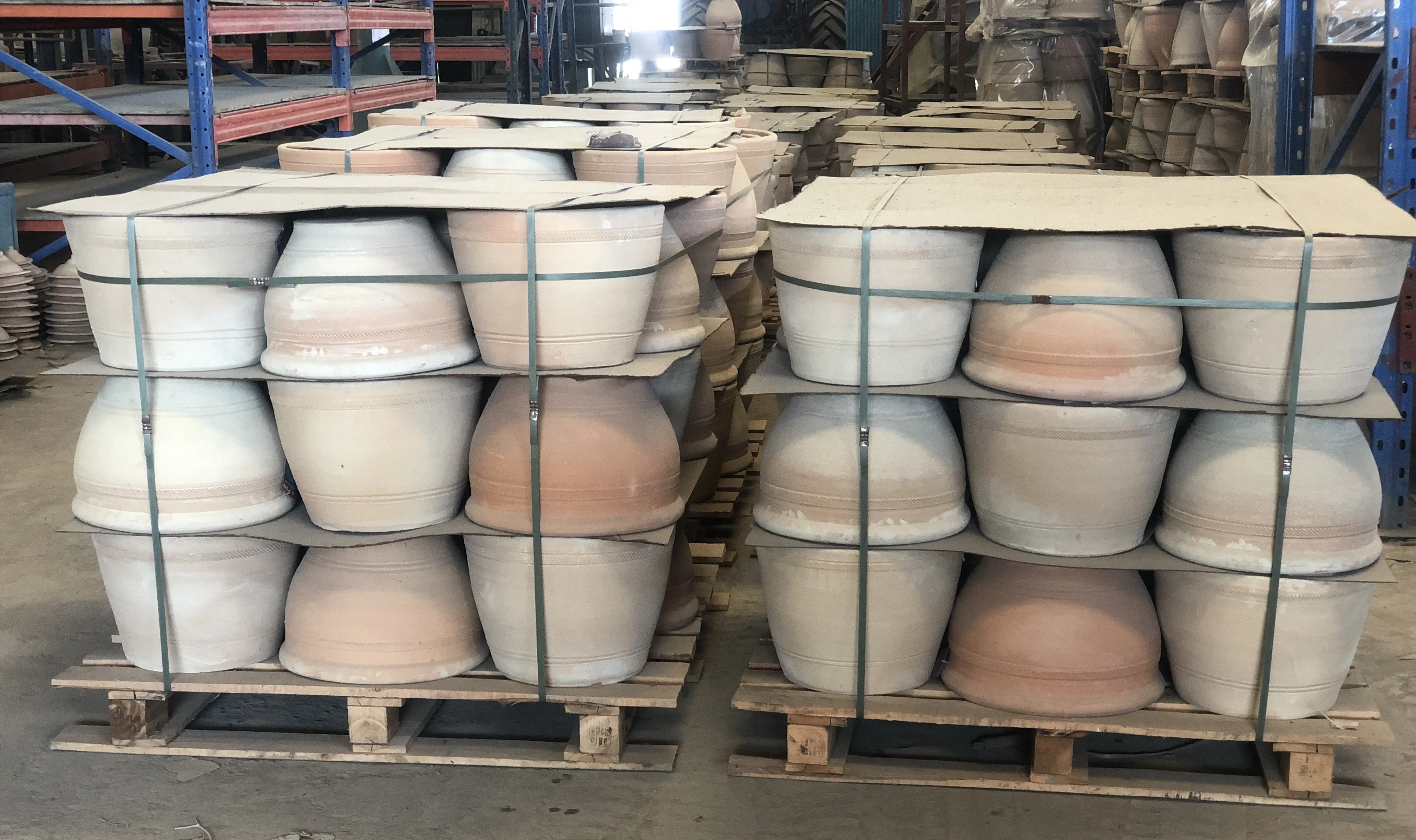
Every premium terracotta planter begins with carefully prepared natural clay. Clay composition influences strength, firing behaviour, colour, and the planter's ability to regulate moisture after firing. The raw clay is cleaned, blended, and conditioned before production begins. Consistent preparation reduces impurities and improves the structural integrity of finished planters.
| Material Characteristic | Importance |
|---|---|
| Plasticity | Allows the clay to be shaped on the wheel or in moulds without cracking or tearing. |
| Mineral Composition | Influences firing behaviour, final colour, and the degree of porosity in the finished pot. |
| Particle Size | Improves consistency, surface finish, and structural strength of the fired product. |
| Moisture Content | Essential for controlled forming and drying. Too wet causes sagging; too dry causes cracking. |
Forming the Planter
After preparation, the clay is formed into its final shape. Production methods vary depending on the collection, required consistency, and manufacturing philosophy. Each method produces different characteristics that suit different markets and price points.
| Production Method | Advantages | Best For |
|---|---|---|
| Handmade | Unique character, traditional craftsmanship, natural variation, premium positioning. | High-end retail, boutique garden centres, luxury hospitality. |
| Mould Assisted | Excellent dimensional consistency for large production runs, lower unit cost. | Volume wholesale, chain retailers, standard catalogues. |
| Combination Method | Balances precision with handcrafted finishing. Consistent shapes with artisan details. | Mid-premium retail, designer collections, commercial projects. |
💡 Professional Tip
Minor variations in handmade terracotta are signs of craftsmanship rather than manufacturing defects. Authentic clay products should retain subtle differences in colour, texture, and wall thickness that reflect their handmade origin. If every pot looks identical, it may be mass-produced rather than genuinely handcrafted.
Controlled Drying
Freshly formed clay contains a significant amount of water — typically 20–25% by weight. Before firing, this moisture must be removed slowly and evenly over a period of 7–10 days. Drying too quickly creates internal stresses that may lead to cracks, distortion, or structural weakness during firing.
⚠ Why Controlled Drying Matters
Many defects blamed on firing actually originate during the drying stage. Uneven moisture loss is one of the most common causes of cracking in ceramic production. Professional manufacturers use climate-controlled drying rooms with regulated temperature and humidity to ensure moisture leaves the clay gradually from the surface inward. Rushing this stage to meet production deadlines is a hallmark of low-quality manufacturing.
Kiln Firing
The kiln transforms soft clay into durable terracotta through carefully controlled heating. During firing, clay particles permanently bond together through vitrification, creating the strength and stability required for long-term outdoor use. Correct firing develops the characteristic warm terracotta colour while maintaining the natural porosity that makes terracotta suitable for container gardening.
| Stage | Temperature Range | Purpose |
|---|---|---|
| Initial Heating | Room temp to 120°C | Removes remaining physical moisture without steam pressure damage. |
| Intermediate Stage | 120°C to 600°C | Stabilises the clay structure, burns off organic impurities. |
| Peak Temperature | 1000°C to 1050°C | Develops permanent strength through partial vitrification. Critical for frost resistance. |
| Controlled Cooling | 1050°C to room temp | Prevents thermal shock and cracking. Slow cooling is essential for structural integrity. |
Wall Thickness Engineering
Wall thickness affects far more than strength. It influences total weight, shipping costs, drying behaviour, firing performance, and long-term durability. Contrary to popular belief, thicker walls are not automatically better. The correct thickness depends on the planter's diameter, intended use, and structural requirements.
| Condition | Result |
|---|---|
| Too Thin | Greater risk of breakage during handling, shipping, and freeze-thaw cycles. |
| Too Thick | Increased weight, higher transport costs, slower drying, potential firing cracks. |
| Engineered Thickness | Optimal balance between strength, durability, weight, and cost efficiency. |
🏭 Engineering Insight
Professional manufacturers design wall thickness differently for each planter size. A wall suitable for a 20 cm pot (typically 8–10 mm) would not provide sufficient structural support for an 80 cm architectural planter, which requires 15–20 mm walls to resist the forces of a full soil load and mature tree. Wall thickness should increase proportionally with diameter, following engineering principles rather than arbitrary standards.
Drainage Engineering
Drainage holes are among the most important functional features of any terracotta planter. Their diameter, position, and finish influence water removal speed, root oxygen availability, and overall plant health. Poor drainage design is one of the most common causes of plant failure in container gardening.
- Promotes healthy root aeration — oxygen reaches the root zone, preventing anaerobic conditions.
- Reduces standing water — prevents waterlogging and root rot diseases.
- Improves long-term root development — roots grow deeper when not sitting in saturated soil.
- Supports natural moisture regulation — works with terracotta's porosity for balanced hydration.
- Helps prevent root diseases — Phytophthora and Pythium thrive in waterlogged conditions.
Quality Control Before Shipment
Before premium terracotta planters leave the factory, each production batch should undergo systematic quality inspection. While authentic handmade terracotta naturally exhibits subtle variation, quality control ensures that every planter meets consistent functional standards before shipment.
| Inspection Area | What Is Checked | Acceptance Standard |
|---|---|---|
| Dimensions | Diameter, height, base width, wall thickness. | Within ±5% of specification for handmade; ±2% for moulded. |
| Surface Finish | Cracks, chips, glaze defects, colour uniformity. | No structural cracks; minor surface marks acceptable for handmade. |
| Structural Integrity | Tap test for hollow sounds, visual crack inspection. | Solid sound throughout; no visible cracks or weak points. |
| Drainage | Hole diameter, position, blockage, finish quality. | Clear, centred holes of specified diameter with smooth edges. |
| Colour Consistency | Batch-to-batch colour matching within collections. | Visually consistent under standard lighting conditions. |
| Weight | Empty weight compared to specification. | Within ±10% of target weight for the size and style. |
| Packaging | Wrapping, carton strength, pallet stability, labelling. | Protects products throughout handling and international shipping. |
Commercial Buying Guide for Wholesale Terracotta Pots
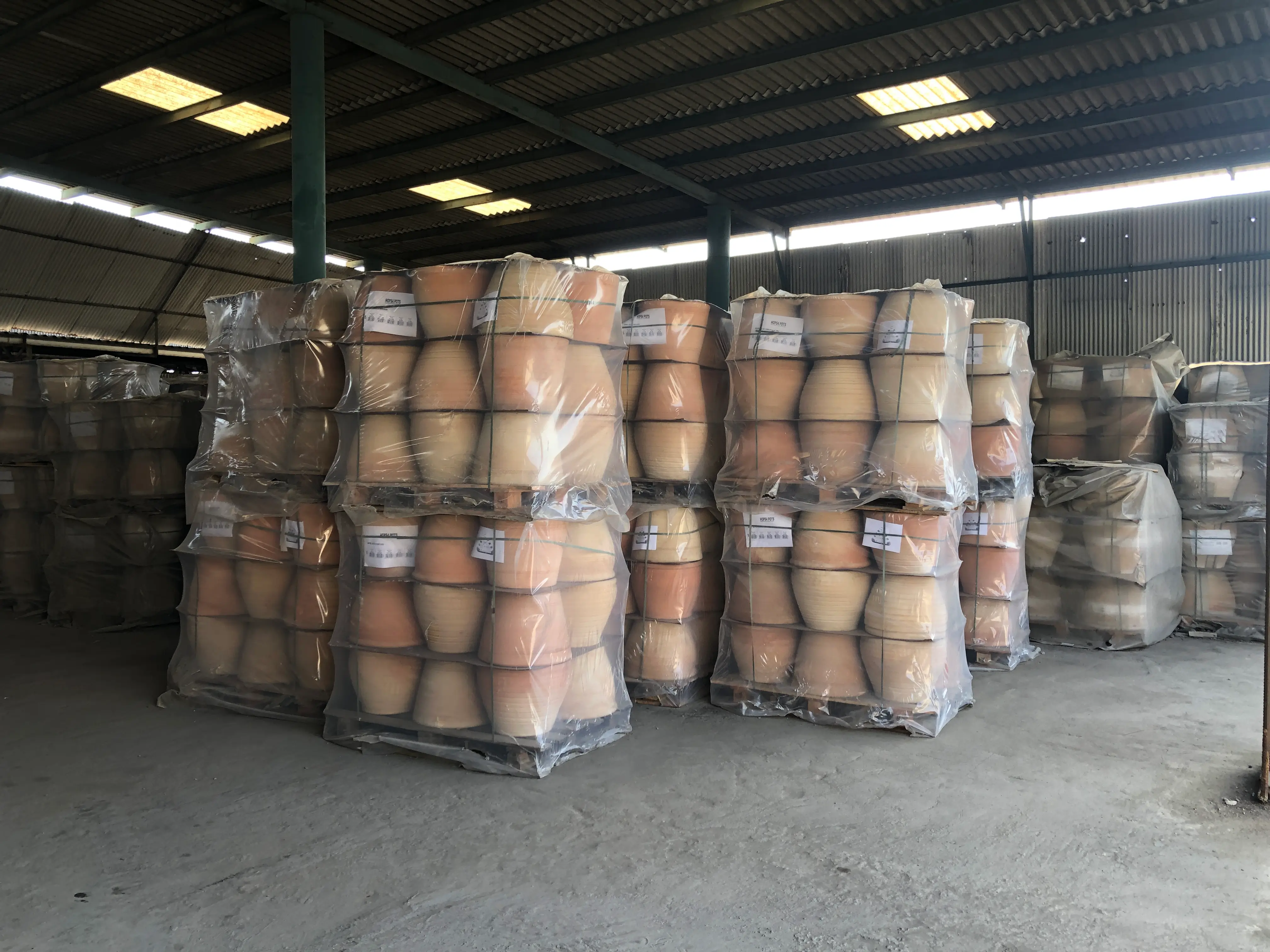
Buying terracotta planters for a commercial project differs significantly from purchasing a single pot for a home garden. Professional buyers evaluate manufacturing capability, production consistency, logistics, quality assurance, and long-term supplier relationships alongside aesthetics and price.
Whether you are sourcing for a garden centre, importing full container loads, or specifying planters for a hospitality project, selecting the right manufacturing partner is just as important as choosing the right product. This section covers the commercial considerations that separate successful import programmes from costly mistakes.
🏭 Commercial Insight
Successful import programmes are built on repeatability rather than one-time transactions. Consistent quality, reliable production schedules, and clear communication are often more valuable than achieving the lowest purchase price. A supplier who delivers consistent 40 cm pots that match your specification every time is worth more than one who offers a lower price but ships variable products that frustrate your customers.
Who Buys Terracotta Pots in Bulk?
Commercial terracotta planters are supplied to a wide variety of industries. Each buyer category has different priorities, purchasing criteria, and volume requirements.
| Buyer Type | Typical Order Volume | Primary Requirements |
|---|---|---|
| Garden Centres | 500–2,000 units | Coordinated collections, repeat supply, retail presentation, barcode labelling. |
| Importers & Distributors | 1–5 containers | Container optimisation, quality consistency, long-term supply, competitive pricing. |
| Landscape Architects | 100–500 units | Architectural dimensions, project quantities, specification support, CAD drawings. |
| Hotels & Resorts | 200–1,000 units | Large-format decorative planters, premium finishes, custom colours, branding. |
| Property Developers | 500–5,000 units | Durability, visual consistency, installation reliability, warranty support. |
| Municipal & Public Projects | 1,000–10,000 units | Long service life, standardised sizing, compliance certification, competitive tender pricing. |
Why Professional Buyers Order Collections Instead of Individual Sizes
Retailers and landscape designers rarely purchase isolated planter sizes. Instead, they build coordinated collections that allow customers to create balanced planting arrangements using matching proportions, rim styles, and colour finishes across multiple diameters.
| Collection | Typical Sizes | Best For |
|---|---|---|
| Starter Collection | 15 cm · 20 cm · 25 cm | Kitchen gardens, windowsills, small retail displays. |
| Core Collection | 30 cm · 35 cm · 40 cm · 50 cm | Garden centres, residential landscaping, patio planting. |
| Architectural Collection | 60 cm · 80 cm · 100 cm | Commercial projects, hospitality, public spaces, specimen trees. |
| Complete Range | 15 cm through 100 cm | Full-service retailers, large landscape contractors, developers. |
💡 Retail Strategy
Displaying coordinated terracotta collections encourages customers to purchase multiple complementary sizes rather than a single planter. This often increases average order value by 40–60% while creating a stronger visual presentation. Group collections by colour finish (classic red, whitewash, antique) rather than mixing finishes on the same shelf.
Export Packaging Standards
Terracotta is a durable material, but like all ceramics it requires appropriate packaging during transportation. Export packaging should protect products throughout handling, storage, and international shipping while remaining efficient for warehouse operations.
- Protective wrapping — bubble wrap or foam sheets around each individual planter.
- Corrugated export cartons — double-wall cartons rated for international shipping.
- Edge and rim protection — cardboard collars to protect vulnerable rim edges.
- Palletised shipments — standard ISPM-15 treated pallets for international compliance.
- Stretch wrapping — stabilises loads and protects against moisture during ocean transit.
- Clear export labelling — HTS codes, country of origin, handling instructions, and batch numbers.
Container Loading & Freight Optimisation
Efficient container loading helps reduce shipping costs and minimise movement during transit. Because terracotta products are both heavy and fragile, professional loading plans consider weight distribution as well as available volume.
| Container Type | Volume | Typical Application |
|---|---|---|
| 20 ft Standard | 33 CBM | Dense, heavy ceramic shipments. Best for single-size orders. |
| 40 ft Standard | 67 CBM | Mixed-size planter collections. Most common for wholesale. |
| 40 ft High Cube | 76 CBM | Large-format architectural planters where height is critical. |
🏭 Logistics Insight
Well-designed terracotta collections often include nesting capabilities, allowing smaller planters to fit inside larger ones during shipping. A conical 20 cm pot can nest inside a 25 cm, which nests inside a 30 cm, dramatically improving freight efficiency without compromising product protection. This single design feature can reduce shipping costs by 25–35% compared to non-nesting designs.
OEM & Private Label Manufacturing
Many commercial buyers require products that extend beyond standard catalogue collections. Original Equipment Manufacturing (OEM) and private label programmes allow retailers and distributors to develop exclusive product ranges aligned with their own brand identity.
| Customisation | Examples | Minimum Order |
|---|---|---|
| Dimensions | Custom heights, diameters, and proportions. | 1,000 units per SKU |
| Branding | Embossed logos, incised marks, printed labels on base. | 500 units per SKU |
| Surface Finish | Custom colours, antique washes, whitewash, reactive glazes. | 1,000 units per SKU |
| Packaging | Retail-ready cartons, branded labels, barcode integration. | 500 units per SKU |
| Drainage | Modified hole size, additional holes, plug options. | 1,000 units per SKU |
Commercial Buyer Checklist
Before selecting a terracotta manufacturer, professional buyers should evaluate the following criteria to minimise risk and ensure long-term supply reliability:
- Consistent product dimensions batch-to-batch.
- Reliable production capacity and on-time delivery record.
- Documented quality control procedures and inspection reports.
- Export-ready packaging systems with international shipping experience.
- Clear communication, technical support, and English-language documentation.
- Ability to supply coordinated product collections with matching proportions.
- Long-term manufacturing capability and financial stability.
- Experience with US customs, HTS codes, and import documentation.
Why Work Directly With a Manufacturer?
Working directly with a terracotta manufacturer provides greater control over product quality, technical specifications, and long-term supply than purchasing through multiple intermediaries. Direct collaboration also allows commercial buyers to discuss custom dimensions, coordinated collections, packaging requirements, and future product development with the production team responsible for manufacturing the planters.
🏭 Terrachi Manufacturing Philosophy
Our objective is not simply to produce terracotta pots. We aim to manufacture planter collections that combine traditional craftsmanship with consistent production standards, helping commercial customers build reliable long-term supply programmes for international markets. Every planter is handmade from Indus River alluvial clay, high-fired at 1000°C+, and inspected against a seven-point quality checklist before shipment.
Frequently Asked Questions About Terracotta Pot Sizes
The following questions address many of the most common topics raised by gardeners, landscape designers, retailers, and wholesale buyers. Together they form a practical reference for choosing, using, and sourcing terracotta planters of the correct size for any application.
What size terracotta pot should I buy?
Choose a terracotta planter approximately 5–10 cm (2–4 inches) wider than the plant's existing root ball. The ideal size depends on the plant species, expected growth rate, and intended growing period rather than the plant's current appearance. For herbs, use 15–20 cm pots; for flowering plants, 20–30 cm; for shrubs, 35–50 cm; and for trees like olive or citrus, 60–90 cm. Always consider the plant's mature root system rather than its current nursery container size.
Is a bigger terracotta pot always better?
No. Oversized containers can retain excessive moisture around a small root system, increasing the risk of poor aeration, root rot, and fungal problems. Select a pot that allows healthy root expansion without surrounding a young plant with unnecessary volumes of wet compost. As a rule, increase pot size by only one category at a time when repotting — for example, from 20 cm to 25 cm, not 20 cm to 40 cm.
Why are terracotta pots measured by diameter?
Diameter is the most consistent way to compare planter sizes across manufacturers. A "40 cm terracotta pot" refers to the external diameter measured across the rim. Professional buyers also evaluate height, internal depth, soil capacity, and drainage because these characteristics influence planting performance. In the United States, diameters are often expressed in inches — a 40 cm pot is approximately 16 inches across.
Are handmade terracotta pots all exactly the same size?
No. Authentic handmade terracotta naturally displays minor dimensional and colour variations — typically within ±5% of the stated diameter. These differences reflect traditional craftsmanship rather than manufacturing defects. If every pot in a collection looks identical, it may be mass-produced rather than genuinely handcrafted. Professional buyers accept these variations as evidence of authentic production methods.
How often should I repot into a larger terracotta planter?
Most container plants benefit from repotting every one to three growing seasons, depending on species and growth rate. Signs that repotting is needed include roots emerging through drainage holes, reduced vigour, rapidly drying compost, and visible root circling inside the pot. The best time to repot is early spring, before the active growing season begins.
Why do gardeners prefer terracotta over plastic?
Terracotta is naturally porous, allowing moisture vapour and air to move through the pot walls. This improves root aeration, prevents waterlogging, and helps create a more balanced growing environment. Plastic traps moisture and can lead to anaerobic conditions, root rot, and overheating. Terracotta also provides better thermal insulation and develops an attractive aged patina over time that plastic cannot replicate.
Can terracotta pots be used outdoors all year?
High-quality terracotta planters that have been high-fired at 1000°C+ are suitable for outdoor use in most climates, including regions with frost. Proper drainage, appropriate placement, and avoiding prolonged standing water all help maximise service life. In extremely cold climates (below -15°C / 5°F), consider raising pots on feet to prevent freezing from below, or move valuable specimens to sheltered locations during the coldest months.
What size terracotta pot is suitable for olive trees?
Young olive trees generally begin in containers around 40–50 cm (16–20 inches) in diameter. Mature specimens often require planters measuring 60–90 cm (24–36 inches) or larger, depending on age and expected long-term growth. Olive trees have deep, wide root systems and benefit from the breathability and stability of large terracotta planters. Ensure the pot has adequate drainage and use a well-draining compost mix.
What size pot is recommended for herbs?
Most culinary herbs grow well in terracotta pots between 15 cm and 25 cm (6–10 inches) in diameter. Basil, thyme, and parsley thrive in 15–20 cm pots. Vigorous species such as mint and rosemary benefit from larger containers — 20–30 cm — that provide additional root space and prevent the plant from becoming root-bound during a single growing season. Always use terracotta for herbs that prefer drier conditions, as the porous walls help prevent overwatering.
Do larger terracotta pots require less watering?
Generally yes. Larger containers hold more compost, which stores greater quantities of moisture and reduces the frequency of watering compared with smaller pots. A 50 cm terracotta pot with 45 litres of soil may only need watering once per week in summer, while a 20 cm pot with 3.5 litres may require daily attention. However, the porous nature of terracotta means all sizes dry faster than plastic equivalents, so monitor soil moisture regularly regardless of pot size.
Why do premium terracotta pots cost more?
Higher prices often reflect better raw materials, slower controlled drying schedules, precise kiln firing at 1000°C+, improved quality control with seven-point inspection, stronger export packaging, and greater manufacturing consistency. Cheap terracotta may be low-fired, rushed through drying, and lack structural reinforcement — leading to cracking, poor frost resistance, and short service life. For commercial buyers, the total cost of ownership over 10–20 years makes premium terracotta significantly more economical.
How do wholesale buyers choose planter sizes?
Commercial buyers typically purchase coordinated collections that include multiple diameters rather than isolated sizes. Matching proportions, rim styles, and colour finishes improve retail presentation and simplify merchandising. Most wholesale programmes begin with a Starter Collection (15–25 cm), expand to a Core Collection (30–50 cm), and add an Architectural Collection (60–100 cm) for large-scale projects. Nesting capabilities — where smaller pots fit inside larger ones — significantly improve shipping efficiency and reduce freight costs.
What is the difference between terracotta and ceramic pots?
Terracotta is a specific type of earthenware made from unglazed, fired clay with a characteristic reddish-brown colour. Ceramic pots are a broader category that includes glazed earthenware, stoneware, and porcelain. Terracotta is more porous and breathable than glazed ceramic, making it better for plants that need good drainage and air circulation. Glazed ceramic pots retain moisture longer and are less prone to evaporation through the walls. For a detailed comparison, see our Terracotta vs Ceramic Pots guide.
How do I prevent terracotta pots from cracking in winter?
To prevent terracotta pots from cracking in winter, ensure they are high-fired at 1000°C+ for frost resistance. Raise pots off the ground using pot feet to prevent water freezing beneath them. Avoid overwatering before frost sets in, as saturated soil expands when frozen. In very cold climates (below -15°C), move valuable specimens to sheltered locations or wrap pots in bubble wrap or hessian for insulation. Never allow pots to sit in standing water during freezing conditions.
Key Takeaways
Looking for Premium Terracotta Pots?
Whether you require coordinated planter collections, OEM manufacturing, or export-ready wholesale supply, Terrachi Clay can support your business with professionally manufactured terracotta products designed for international markets. Our standard range includes 100+ sizes from 10 cm to 100 cm, with custom dimensions available for orders of 1,000+ units per SKU.