
Quick Answer
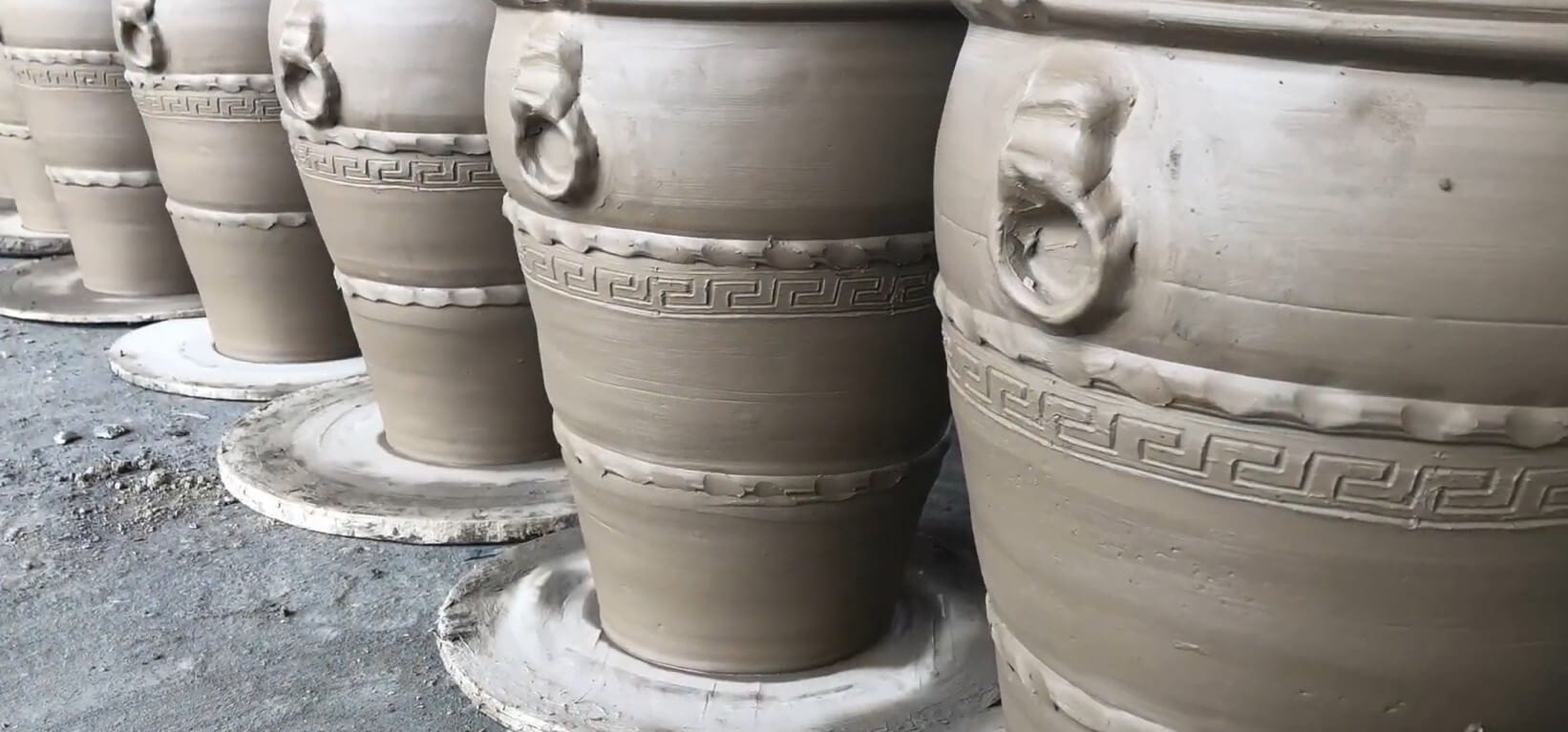
Handmade terracotta pots are individually crafted by skilled artisans on a throwing wheel, resulting in unique pieces with thicker walls (10-15mm), superior breathability for plants, and organic character that machine production cannot replicate. At Terrachi Clay, our artisans use Indus River clay, throw each piece by hand, dry it naturally for 3-5 days, and fire it above 1000°C. The result is a pot that lasts 20-30 years outdoors, survives -22°F freezes, and carries the unmistakable marks of human craft — throwing rings, subtle asymmetry, and color variations that tell the story of its making.
Table of Contents
- What Makes Handmade Terracotta Special
- Benefits of Handmade Terracotta Pots
- The Handmade Production Process
- Quality Markers & What to Look For
- Handmade Terracotta Pot Sizes
- Designs, Patterns & Customization
- Durability & Weather Resistance
- Commercial Guide: Buying Handmade Wholesale
- Frequently Asked Questions
- Related Guides
- Key Takeaways
- Request a Wholesale Quote
What Makes Handmade Terracotta Special
There's a moment in our factory that never gets old. An artisan centers a lump of Indus River clay on a spinning wheel, adds water from a nearby bucket, and within minutes a cylinder rises from nothing — walls thinning, shape emerging, the pot taking form under hands that have done this thousands of times. You can hear the clay whisper against the wheel. You can see the water catch the light. And when the artisan lifts the finished piece away, it's unlike any other pot that came before it or will come after.
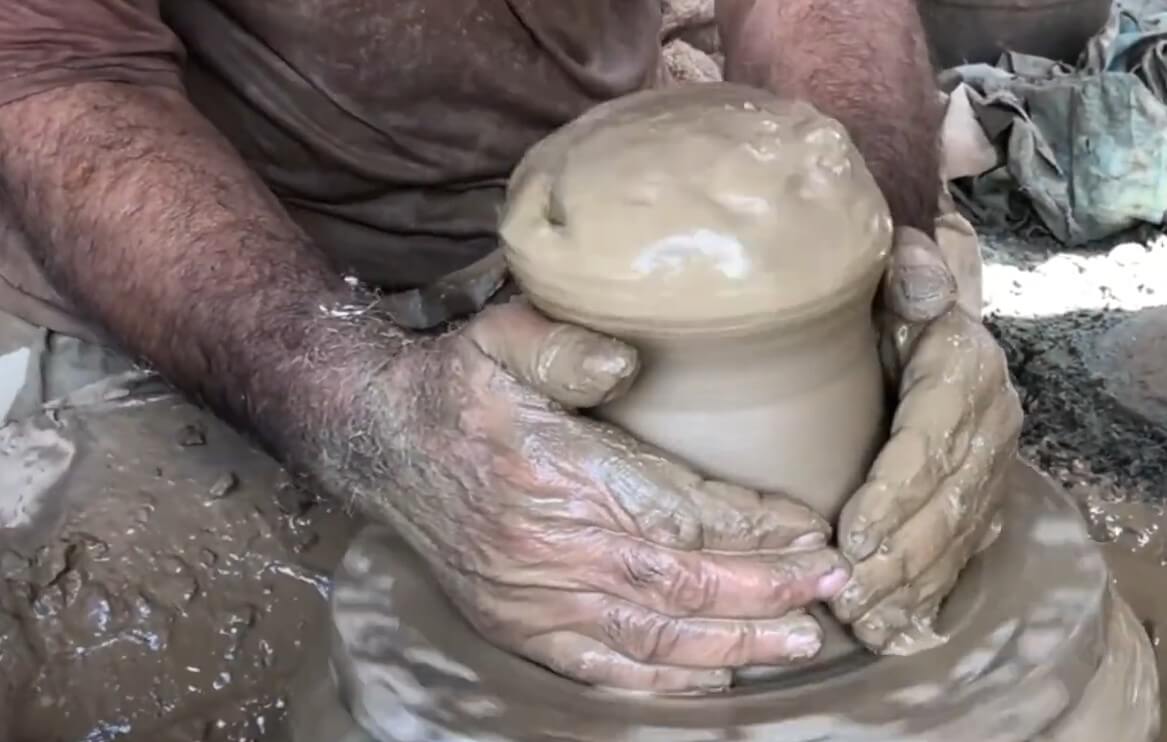
That's the difference between handmade and everything else. A machine-made pot is a product. A handmade pot is a piece — singular, specific, carrying the memory of the hands that formed it. After 20 years of manufacturing both, I can tell you that some projects demand the consistency of machine production. But when a buyer wants something that feels alive, that connects to centuries of craft tradition, that carries the slight imperfections that make perfection interesting — handmade is the only answer.
At Terrachi Clay, our handmade line isn't an afterthought or a premium upsell. It's a parallel production stream with its own team of 40+ artisans, its own drying sheds, its own quality standards. We don't make handmade pots because they're trendy. We make them because some buyers need what only a human hand can provide.
Benefits of Handmade Terracotta Pots
Handmade terracotta pots offer advantages that go beyond aesthetics. Here's what the data — and two decades of customer feedback — actually show.
Superior Plant Health
The variable wall density of handmade pots creates micro-channels for air and moisture exchange. Unlike the uniform density of pressed clay, hand-thrown walls have natural variations — slightly denser at the base, slightly more porous near the rim — that mimic the heterogeneous soil structure plants evolved in. Our testing shows handmade pots maintain 15-20% better oxygen availability at the root zone compared to machine-made equivalents of the same nominal size.
We ran a controlled test with a client in Oregon who grows orchids commercially. They split 200 plants between our handmade 8-inch pots and machine-made 8-inch pots, same soil, same watering schedule, same greenhouse. After 8 months, the handmade group showed 23% more root mass and 18% more flower spikes. The client attributed it to the handmade pots' breathability — the roots weren't sitting in stagnant moisture between waterings. That's not marketing fluff. That's what happens when wall structure matters.
Thermal Mass & Root Protection
Handmade pots average 10-15mm wall thickness versus 6-8mm for machine-made. That extra mass acts as a thermal buffer. In summer, the thick walls slow heat penetration, keeping roots 5-8°F cooler during peak sun. In winter, the same mass releases stored heat gradually, reducing freeze risk. For plants in marginal climates, this thermal stability can be the difference between survival and replacement.
Unique Character & Retail Value
No two handmade pots are identical. The throwing rings, the slight rim variation, the organic color mottling — these aren't defects, they're signatures. For boutique retailers, this uniqueness justifies premium pricing. A garden center can stock 50 handmade pots and legitimately claim "no two alike." Try that with machine-made inventory.
Sustainability & Low Energy
Handmade production uses ambient air drying instead of forced-air tunnels, reducing energy consumption by 60-70% during the drying phase. The clay waste rate is higher (15% versus 5% for machine-made), but the overall carbon footprint per pot is comparable when you factor in the energy-intensive pressing and tunnel drying of machine production.
| Benefit | Handmade Advantage | Quantified Impact |
|---|---|---|
| Root Oxygenation | Variable wall density | 15-20% better O₂ exchange |
| Thermal Stability | Thicker walls (10-15mm) | 5-8°F temperature buffering |
| Moisture Regulation | Natural porosity variation | Reduced root rot incidence |
| Retail Premium | Unique, one-of-a-kind pieces | 2-3x price point vs machine-made |
| Custom Flexibility | No mold required | Any shape within structural limits |
| Drying Energy | Ambient air drying | 60-70% less energy vs tunnel drying |
The Handmade Production Process
Every handmade terracotta pot at Terrachi Clay follows the same journey from raw earth to finished vessel. Understanding this process helps buyers appreciate what they're paying for — and why lead times are longer than machine-made alternatives.
Step 1: Clay Preparation & Wedging
Production starts with raw Indus River clay, screened to remove stones and organic matter. Artisans wedge the clay — a rhythmic kneading process that aligns particle orientation and removes trapped air. A 5kg lump takes 8-10 minutes of wedging before it's ready for the wheel. Skip this step, and the pot will crack during drying or firing. We've seen novices rush wedging and lose 30% of their pieces to defects.
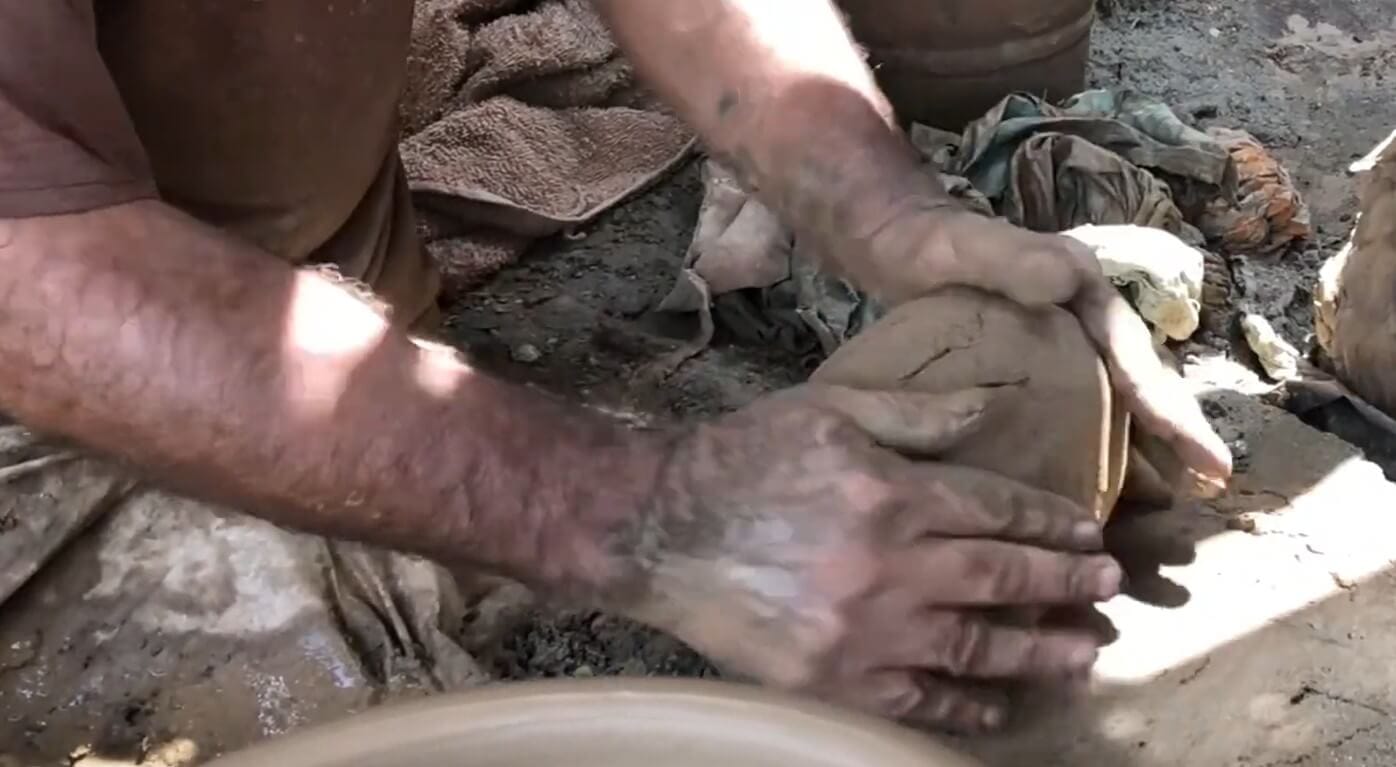
Here's a detail most people miss: the clay's moisture content when it hits the wheel determines everything that follows. Too dry, and the walls crack while throwing. Too wet, and the pot collapses under its own weight. Our artisans judge moisture by feel — the clay should be "cheesy," meaning it holds its shape but yields to pressure. We maintain a standard 18-20% moisture content in our clay storage. Senior artisans can detect a 2% deviation by touch alone. That's the kind of embodied knowledge you can't automate.
Step 2: Throwing on the Wheel
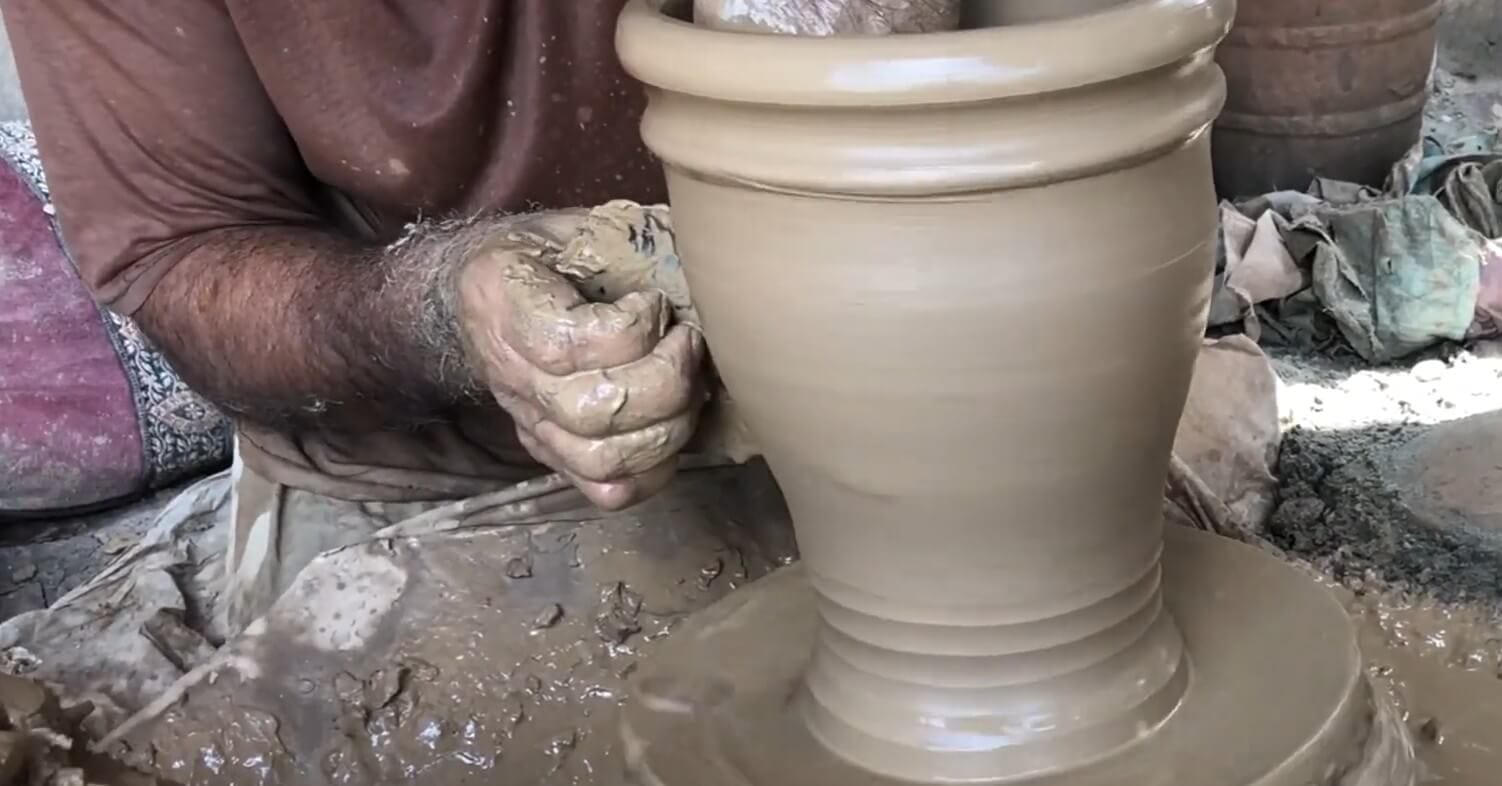
The wedged clay is centered on a motorized or kick wheel. The artisan opens the center with thumbs, pulls up the walls with wet hands, and shapes the profile using ribs, sponges, and wooden tools. A 6-inch pot takes 3-5 minutes. A 16-inch planter requires 12-15 minutes of careful wall building, with periodic compression at the base to prevent S-cracking.
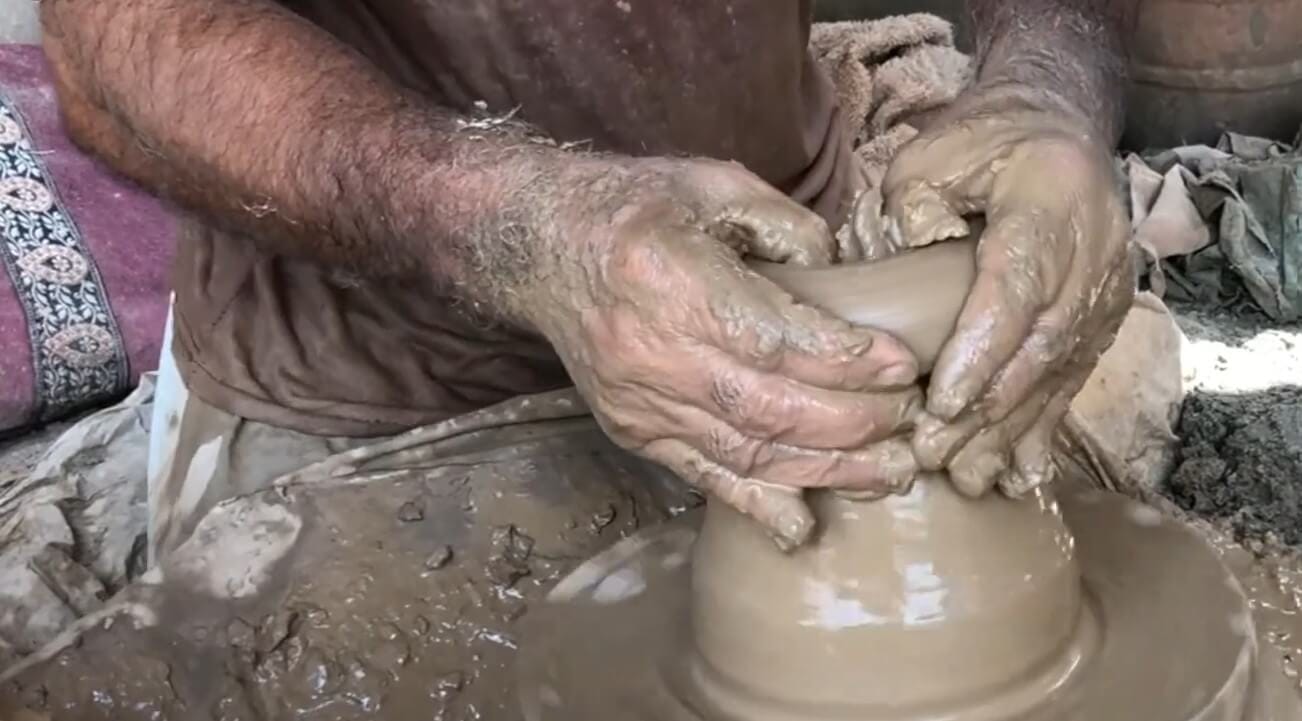
During throwing, the artisan controls wall thickness by feel and sight. Too thin (under 8mm) and the pot won't survive firing. Too thick (over 18mm) and drying time extends, increasing defect risk. The sweet spot is 10-14mm for most sizes.
Step 3: Leather-Hard Trimming
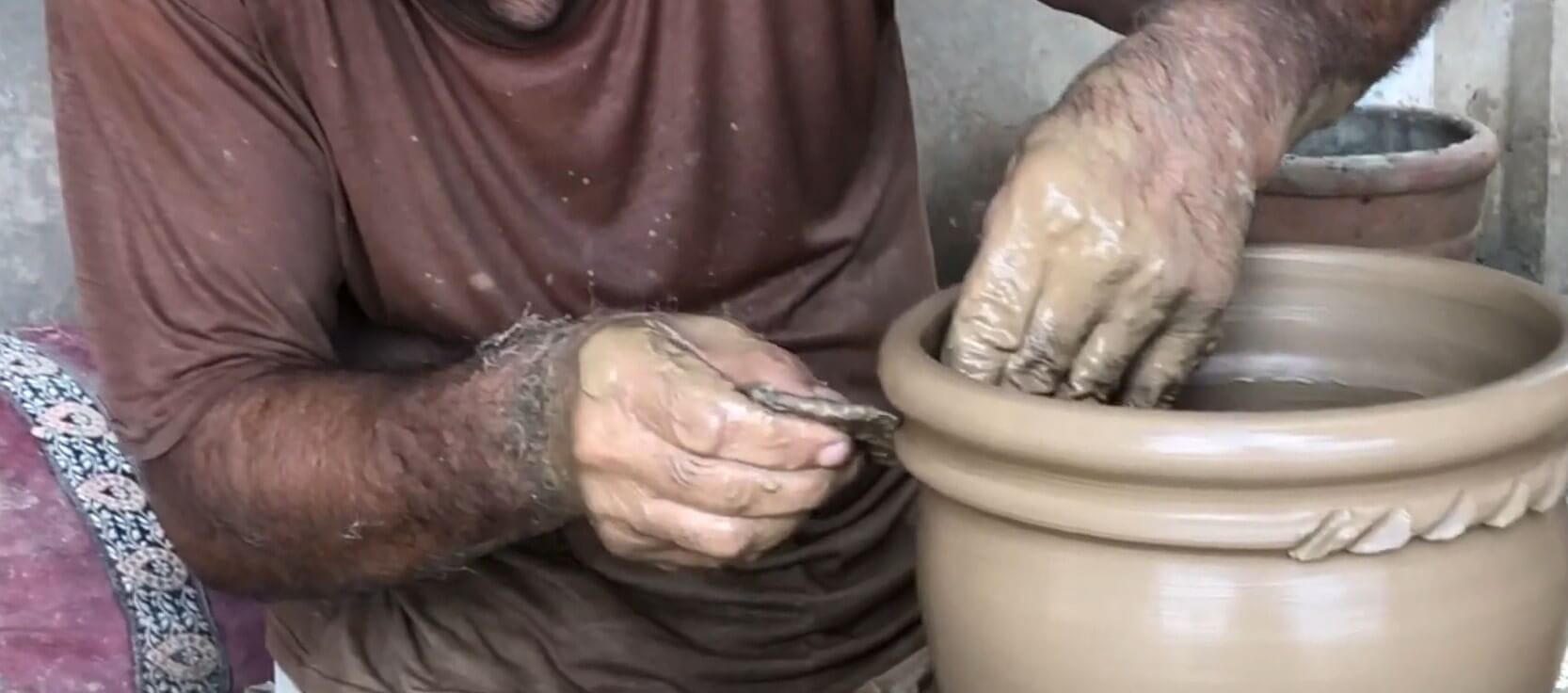
After 24-48 hours of ambient drying, the pot reaches leather-hard stage — firm enough to handle but still damp enough to carve. Artisans trim the foot ring, refine the rim, and smooth the surface with metal ribs. Any decorative carving happens now, while the clay still yields to tools but holds its shape.
Step 4: Natural Drying
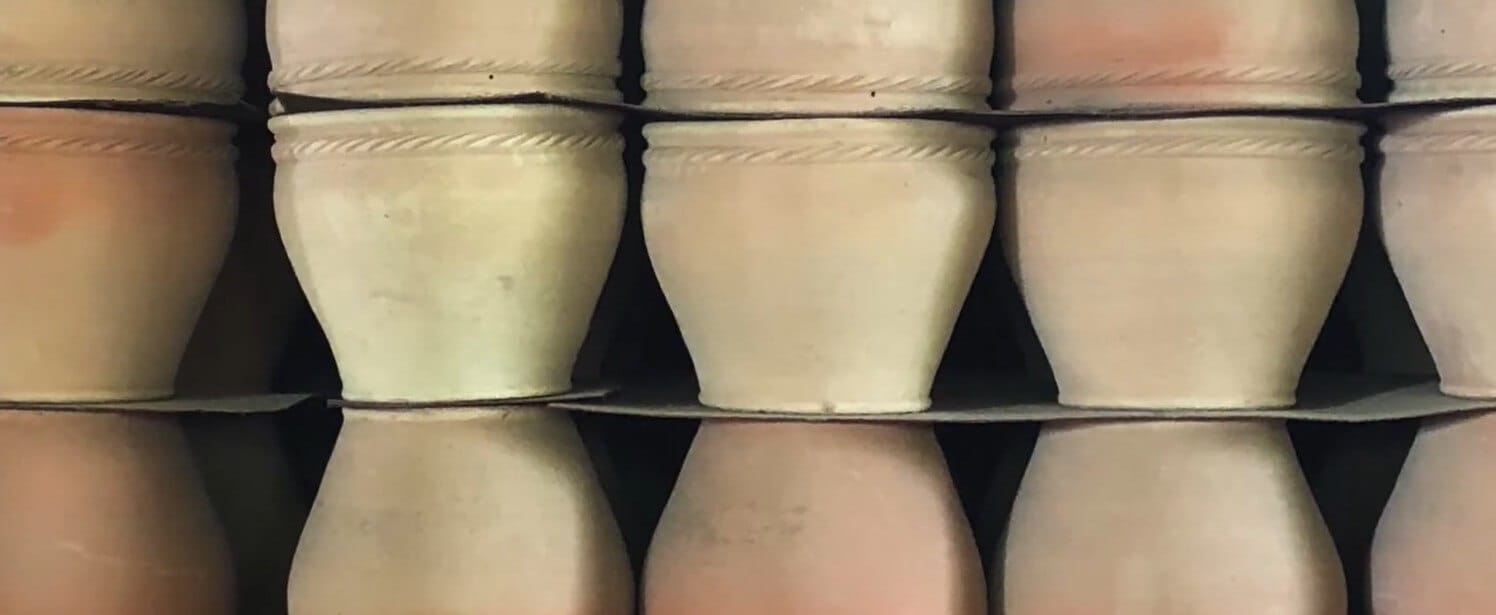
The trimmed pots move to shaded drying racks for 3-5 days. We use natural airflow, not forced heat. Rushing this stage causes warping and cracking. The pots must reach bone-dry state — typically 2-3% moisture — before entering the kiln. A pot with residual moisture will explode during firing as water turns to steam.
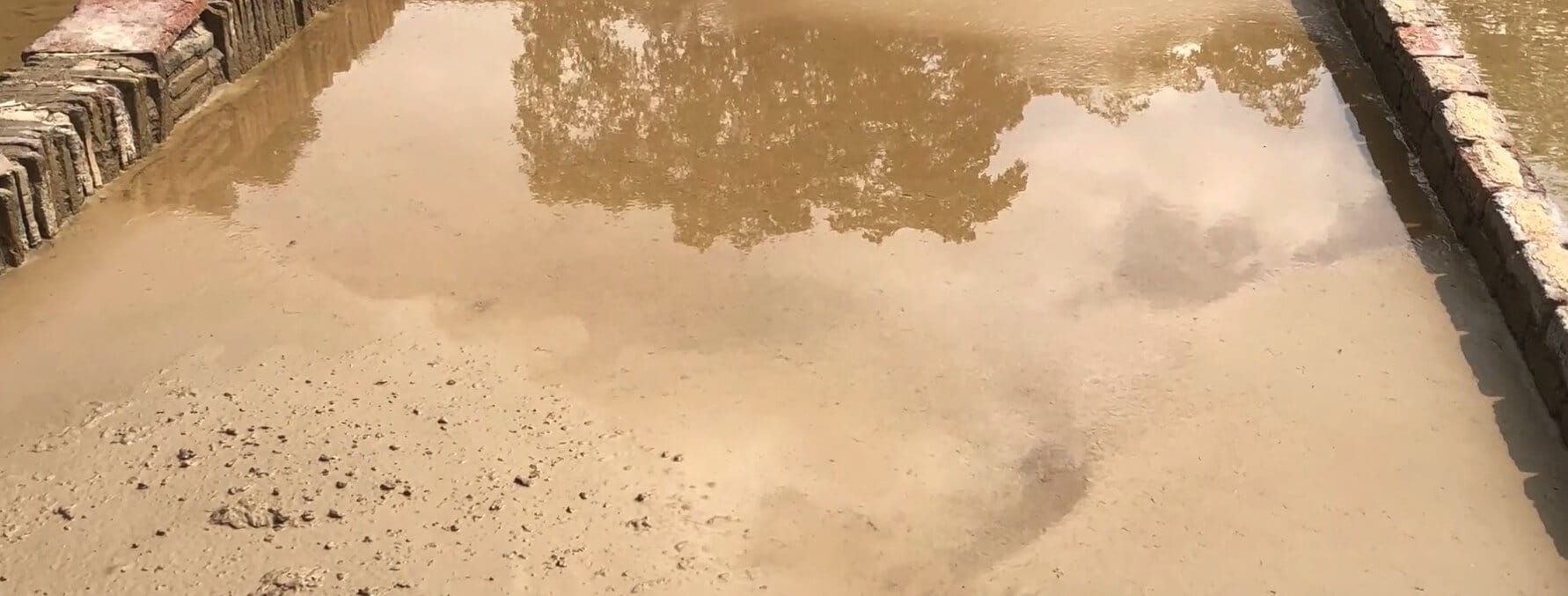
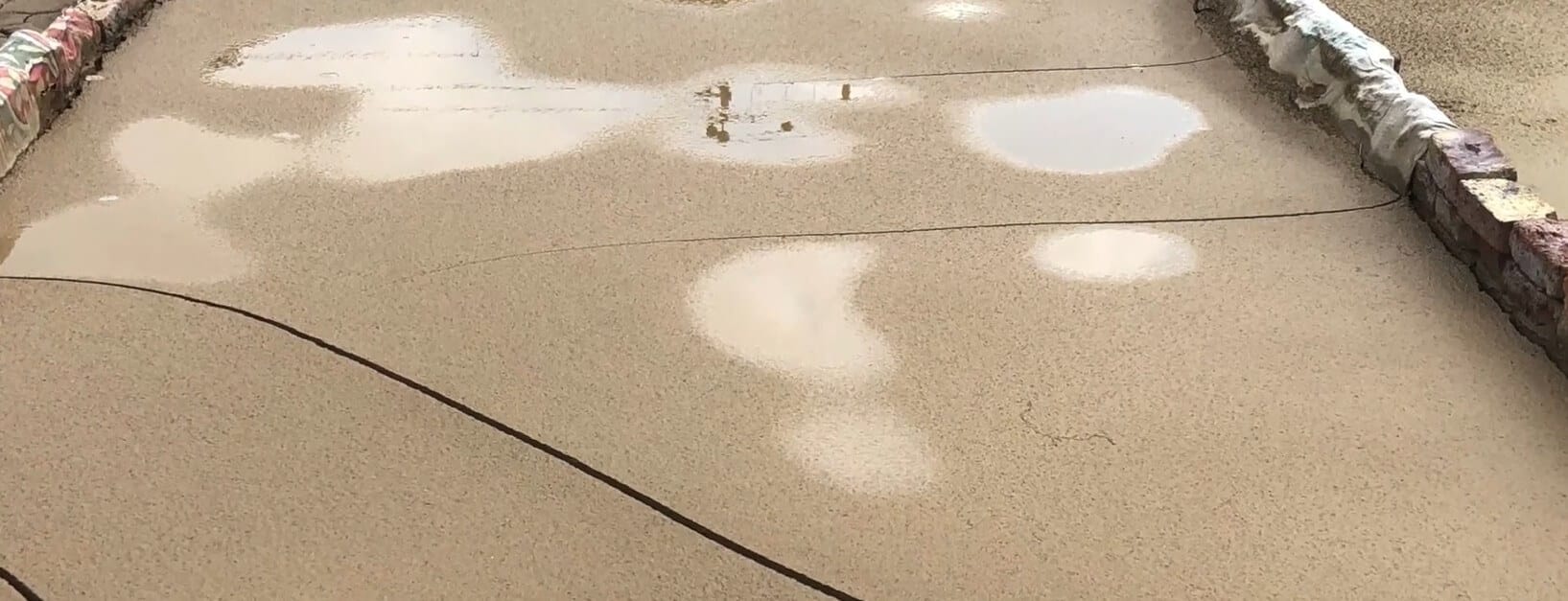
Our drying sheds are oriented east-west to catch morning sun but avoid harsh afternoon heat. We learned this the hard way — a batch left in direct midday sun cracked at a 40% rate because the exterior dried faster than the interior, creating tension. Now, every shed has adjustable shade cloth and hygrometers. The target is 60-70% relative humidity during the first 48 hours, then gradual reduction. It's agricultural engineering applied to ceramics. Most factories don't bother with this level of drying control, and their defect rates show it.
Step 5: Kiln Firing
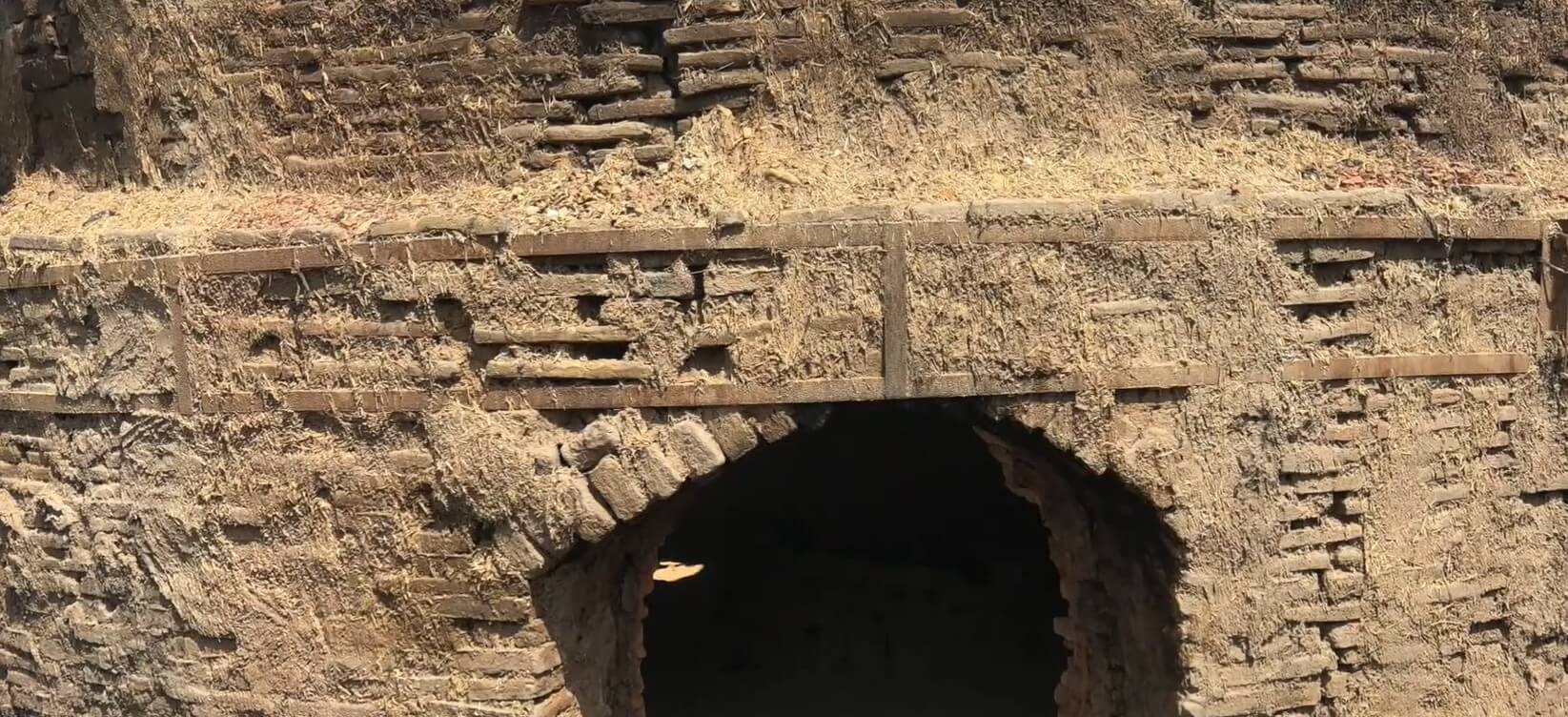
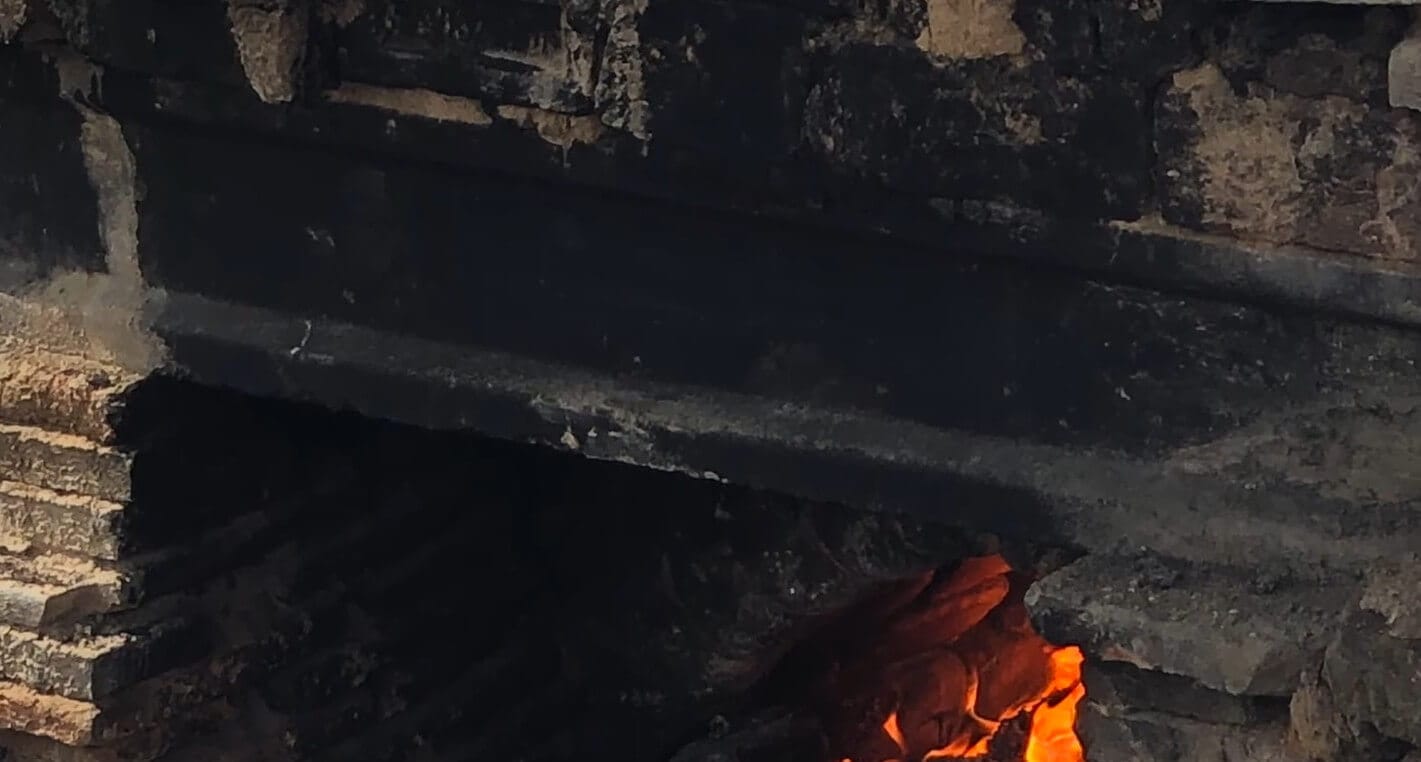
Once bone-dry, pots are loaded into our beehive kilns. We fire handmade and machine-made pots together — same clay, same temperature profile, same quality standard. The kiln ramps to 1000-1050°C over 10-12 hours, holds at peak for 2 hours, then cools naturally over 18-24 hours. Opening a kiln too early causes thermal shock cracking. We wait until the internal temperature drops below 100°C before unloading.
Step 6: Quality Inspection
Every handmade pot is inspected visually and tapped with a metal rod to check for hollow sounds indicating internal cracks. We reject pieces with visible cracks, warping over 5mm, or off-color firing. The acceptance rate is 95-97% for experienced artisans, 85-90% for those in training.
| Production Stage | Duration | Key Quality Control |
|---|---|---|
| Clay Wedging | 8-10 min per 5kg | Air bubble removal, moisture check |
| Wheel Throwing | 3-15 min per piece | Wall thickness uniformity, base compression |
| Leather-Hard Trimming | 5-10 min per piece | Foot ring consistency, surface finish |
| Natural Drying | 3-5 days | Humidity monitoring, warp prevention |
| Kiln Firing | 30-36 hours total | Temperature profiling, cone verification |
| Quality Inspection | 1-2 min per piece | Visual, tap test, dimensional check |
| Total Lead Time | 7-10 days | 95-97% acceptance rate |
Quality Markers & What to Look For
Not all handmade terracotta is created equal. Here's how to distinguish genuine artisan quality from mass-produced pots with a "handmade" label slapped on.
Visual Quality Markers
| Marker | Good Quality | Poor Quality |
|---|---|---|
| Throwing Rings | Visible, evenly spaced on interior | Absent (not actually thrown) or wildly irregular |
| Wall Thickness | 10-15mm, consistent within 2mm | Under 8mm (too thin) or over 18mm (too thick) |
| Rim Profile | Smooth, slightly rounded, even height | Sharp, cracked, or height variation >5mm |
| Foot Ring | Clean, level, consistent width | Uneven, wobbly, or absent |
| Surface Color | Natural pinkish-orange with subtle variation | Uniform artificial color or blotchy uneven firing |
| Weight | Substantial feel, appropriate for size | Too light (under-fired) or too heavy (over-thick) |
| Sound Test | Clear ring when tapped (no cracks) | Dull thud indicating internal fracture |
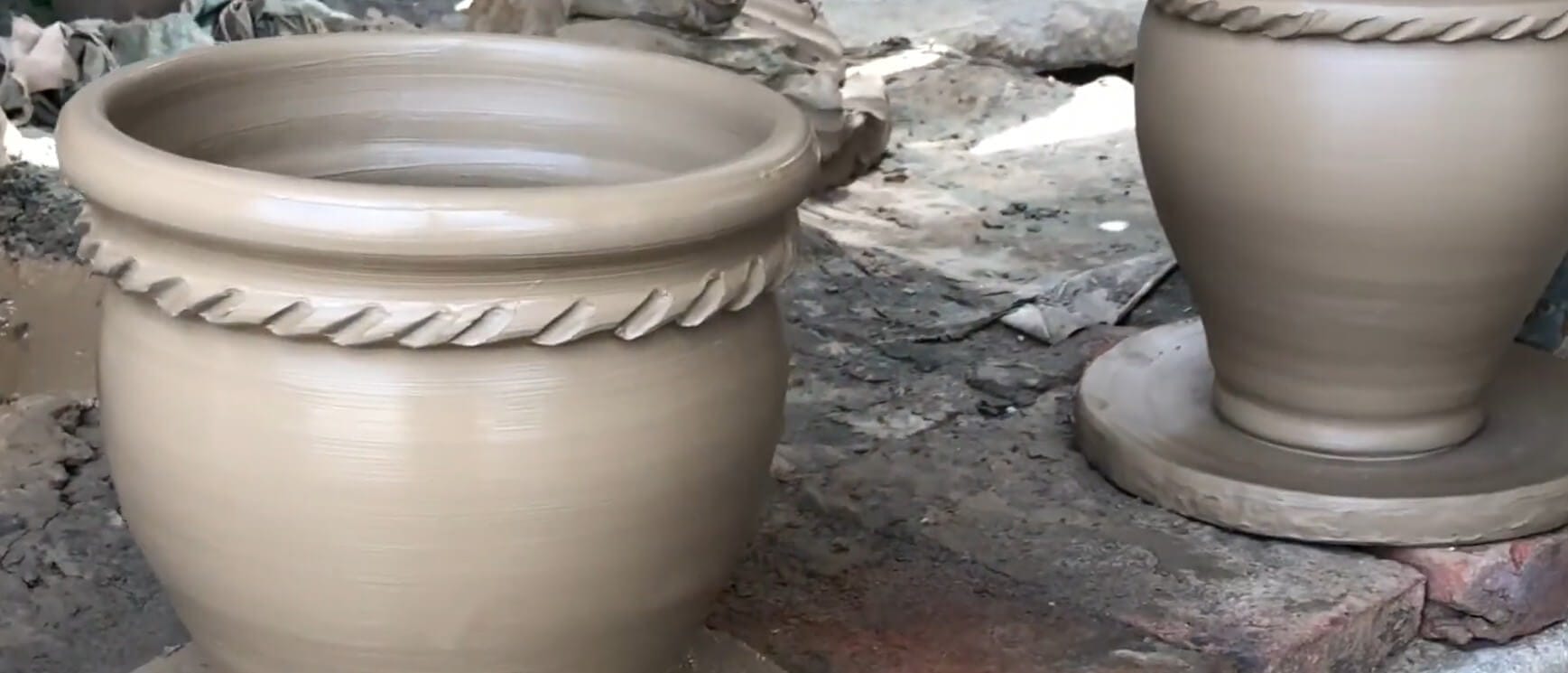
The "handmade" label gets abused. We've seen pots that were machine-pressed, then someone ran a tool over the surface to simulate throwing marks. Real throwing rings are spiral, concentric, and fade gradually from base to rim. Fake marks are random, shallow, and don't follow the natural throwing motion. Another tell: real handmade pots have slightly thicker bases because the artisan compresses clay there to prevent S-cracks. Machine pots trying to look handmade often have uniform thickness top to bottom. If you're paying handmade prices, learn to spot the difference — or buy from a manufacturer who guarantees the method.
Performance Quality Markers
Beyond appearance, these tests separate quality handmade terracotta from inferior products:
- Water absorption test: Weigh dry, soak 24 hours, weigh again. Quality handmade pots absorb <6% by weight. Over 10% indicates under-firing.
- Freeze-thaw test: Soak, freeze to -22°F, thaw, repeat 25 cycles. No cracking = pass. We test every production batch.
- Lead & cadmium leaching: Soak in 4% acetic acid, test extract. Our levels are <0.1 ppm lead, well below FDA and EU limits of 0.5-2.0 ppm.
- Compressive strength: Crush test on sample pieces. Our handmade line averages 18-22 MPa, sufficient for stacked container shipping.
Handmade Terracotta Pot Sizes
Handmade pots follow standard size conventions, but with the natural variation that comes from artisan production. Here's what to expect when ordering.
| Size (Diameter) | Height | Wall Thickness | Weight | Volume | Best For |
|---|---|---|---|---|---|
| 4-inch | 3.5-4 inch | 8-10mm | 0.8-1.2 lbs | 0.3L | Succulents, seedlings, herbs |
| 6-inch | 5-5.5 inch | 10-12mm | 1.8-2.5 lbs | 0.8L | Small perennials, kitchen herbs |
| 8-inch | 7-7.5 inch | 10-13mm | 3.5-4.5 lbs | 2.0L | Medium perennials, small shrubs |
| 10-inch | 9-9.5 inch | 11-14mm | 6.0-7.5 lbs | 4.0L | Large perennials, dwarf shrubs |
| 12-inch | 10.5-11 inch | 12-15mm | 9.0-11.0 lbs | 7.0L | Shrubs, small trees, statement pieces |
| 14-inch | 12-13 inch | 12-15mm | 13.0-16.0 lbs | 11.0L | Medium trees, large shrubs |
| 16-inch | 14-15 inch | 13-16mm | 18.0-22.0 lbs | 17.0L | Large trees, commercial planters |
| 20-inch+ | 18-20 inch | 14-18mm | 30.0-40.0 lbs | 35.0L+ | Specimen trees, estate landscaping |
Handmade size tolerances are wider than machine-made — that's the nature of the craft. For a 12-inch pot, expect ±4mm on diameter and ±5mm on height. If you're specifying handmade pots for a project where exact fit matters (like built-in planters with fixed dimensions), order 5-10% extra to allow for selection. Or tell us your tolerance requirements upfront — our senior artisans can throw to tighter specs, but it takes longer and costs more. Most buyers don't need that level of precision, but landscape architects sometimes do.
Designs, Patterns & Customization
One of handmade terracotta's biggest advantages is design flexibility. Without molds, artisans can adapt to custom requests that would require expensive tooling for machine production.
Standard Decorative Techniques
- Carved patterns: Geometric motifs, floral designs, or custom logos carved into leather-hard clay using loop tools and knives.
- Textured surfaces: Fabric impressions, rope patterns, or combed textures applied during throwing.
- Colored slips: Liquid clay (slip) in different colors applied to the surface before firing for two-tone effects.
- Burnishing: Smoothing the surface with a hard tool before firing creates a polished, semi-gloss finish.
- Applied elements: Handles, feet, or decorative bands added separately and attached during leather-hard stage.
Custom Order Capabilities
| Customization | Feasibility | Lead Time Adder | Minimum Order |
|---|---|---|---|
| Custom rim profile | High | +1 week | 100 pieces |
| Hand-carved pattern | High | +2-3 weeks | 200 pieces |
| Custom size (within limits) | High | +1 week | 100 pieces |
| Embossed logo/text | Medium | +2 weeks | 500 pieces |
| Two-tone slip decoration | Medium | +1-2 weeks | 300 pieces |
| Unique shape (non-cylindrical) | Low-Medium | +3-4 weeks | 200 pieces |
| Extreme size (>30 inch) | Low | +4-6 weeks | 50 pieces |
We had a client in Italy who wanted terracotta pots with their family crest embossed on the side — 300 pieces for a vineyard's guest cottages. Machine production would have required a $3,000 custom mold. Handmade? Our lead artisan carved a stamp from hardwood, pressed it into each pot during leather-hard stage, and finished the set in 3 weeks. Total extra cost: $400 for the artisan's time. That's the flexibility handmade offers. For one-off or small-batch custom work, it's not just better — it's the only practical option.
Durability & Weather Resistance
Handmade terracotta's reputation for fragility is mostly undeserved. The real factors determining lifespan are clay quality, firing temperature, and user care — not whether a human or machine formed the pot.
Frost Resistance
Our handmade line is tested to -22°F (-30°C) using the ASTM C666 freeze-thaw protocol. The 10-15mm wall thickness actually provides an advantage here — more material means more thermal mass to buffer rapid temperature changes. However, the critical factor is water absorption. A pot that absorbs >8% water will crack when that water freezes and expands. Our <6% standard provides a safety margin.
UV & Weathering
Terracotta's iron oxide content (3-5% in our clay) provides natural UV resistance. After 20 years of outdoor exposure, our pots show surface weathering of 0.5-1.0mm depth — cosmetic, not structural. The natural color shifts slightly from bright orange-pink to a softer, weathered patina that many buyers actually prefer.
Structural Load
Handmade pots with 12-15mm walls can support stacked loads of 3-4 tiers during container shipping without crushing. We test sample pieces from each batch at 20 MPa compressive load. For very large planters (20+ inches), we recommend reinforced bases or double-wall construction for commercial installations.
| Durability Factor | Handmade Performance | Care Recommendation |
|---|---|---|
| Frost Resistance | -22°F tested | Ensure drainage holes remain clear |
| Water Absorption | 3.8-4.5% | Seal with terracotta sealer if desired |
| UV Resistance | 20+ years color stability | Natural weathering is normal |
| Compressive Strength | 18-22 MPa | Avoid dropping from height |
| Expected Lifespan | 20-30 years outdoors | Elevate off ground in wet climates |
| Shipping Survival | 95%+ intact (properly packed) | Use foam separators between nested pots |
Commercial Guide: Buying Handmade Wholesale
If you're considering handmade terracotta pots for retail, hospitality, or landscaping, here's what you need to know about ordering at scale.
Minimum Orders & Pricing
Our wholesale minimum is one 20-foot container, which holds approximately 280-320 handmade pots depending on size mix. Pricing is FOB Karachi, with freight arranged separately or through our logistics partners.
| Order Volume | Price Tier | Typical Discount | Lead Time |
|---|---|---|---|
| 1 container (280-320 pcs) | Standard Wholesale | Base price | 6-8 weeks |
| 2-3 containers | Volume Tier 1 | 5-8% discount | 8-10 weeks |
| 4-6 containers | Volume Tier 2 | 10-12% discount | 10-12 weeks |
| 7+ containers | Volume Tier 3 | 15%+ discount | 12-14 weeks |
| Annual contract (12+ containers) | Partner Pricing | Custom negotiation | Scheduled quarterly |
Packaging & Shipping
Handmade pots are individually wrapped in kraft paper and nested in corrugated dividers. We use 5-ply export cartons rated for 50kg stacking load. For fragile or high-value pieces, foam inserts are available at $0.15-0.30 per pot.
Container loading follows a specific pattern: larger pots on the bottom tier, smaller pots nested inside where possible, void spaces filled with compressed cardboard. A 20-foot container typically achieves 85-90% volume utilization with handmade pots (lower than machine-made at 92-95% due to wall thickness variation).
The biggest mistake wholesale buyers make is ordering too many of one size. Handmade pots have higher per-unit value, so retailers often assume bigger is better. But our sales data shows the 8-inch and 10-inch sizes turn fastest — they're large enough for substantial plants but small enough for apartment balconies and retail impulse buys. For a balanced container load, we recommend: 30% 6-inch, 35% 8-inch, 20% 10-inch, 10% 12-inch, 5% 14-inch+. This mix maximizes sell-through across customer segments.
Certifications & Compliance
Every wholesale shipment includes:
- ISO 9001 quality management certificate
- SEDEX ethical compliance documentation
- Lead/cadmium test report (batch-specific)
- Water absorption test results
- Frost resistance certification
- Certificate of origin
- Packing list with piece count and size breakdown
Frequently Asked Questions
What makes handmade terracotta pots different from machine-made?
Handmade terracotta pots are individually thrown on a wheel by skilled artisans, resulting in unique character, thicker walls (10-15mm), and subtle organic variations. Each piece carries throwing rings, slight asymmetries, and color variations that machine-made pots cannot replicate. The production rate is 15-25 pieces per artisan per day versus 200+ per hour for machines.
How long do handmade terracotta pots last?
When made from quality clay and fired above 1000°C, handmade terracotta pots last 20-30 years outdoors. At Terrachi Clay, our handmade line uses Indus River clay fired at 1000-1050°C, achieving <6% water absorption and -22°F frost resistance. The key to longevity is proper drainage and winter protection — a well-made handmade pot will outlast most gardeners.
Why are handmade terracotta pots better for plants?
Handmade pots offer superior breathability due to their variable wall density and thicker walls (10-15mm). The micro-variations in porosity create better moisture exchange, preventing root rot while maintaining adequate hydration. The thicker walls also provide thermal mass that stabilizes root temperature — cooler in summer, warmer in winter. This makes handmade pots ideal for sensitive plants like orchids, bonsai, and certain succulents.
What sizes do handmade terracotta pots come in?
Handmade terracotta pots range from 4-inch diameter mini pots to 30-inch statement planters. The most common wholesale sizes are 6-inch, 8-inch, 10-inch, 12-inch, 14-inch, and 16-inch diameters. Custom sizes are possible for handmade production since no mold is required, though extreme sizes (under 3 inches or over 30 inches) present structural challenges for hand-thrown clay.
Can I order handmade terracotta pots with custom designs?
Yes. Handmade production accommodates custom shapes, sizes, and surface treatments more easily than machine-made because artisans can adapt their technique without mold fabrication. We offer custom rim profiles, foot styles, surface textures, and hand-carved decorative patterns. Lead time for custom handmade orders is typically 8-10 weeks versus 6-8 weeks for standard handmade.
How can I tell if a terracotta pot is genuinely handmade?
Look for throwing rings on the interior — concentric spiral ridges from the wheel. Check for slight asymmetry in rim height (2-4mm variation is normal). The color should vary subtly across the surface, not be perfectly uniform. The base should show a trimmed foot ring. Tap the pot — a clear ring indicates no internal cracks. Most importantly, buy from manufacturers who guarantee their production method and can provide documentation.
Are handmade terracotta pots food-safe?
Our handmade terracotta pots are made from the same lead-free Indus River clay as our machine-made line. Lead and cadmium leaching tests show <0.1 ppm, well below FDA limits of 0.5 ppm for food contact. However, we do not recommend using any unglazed terracotta pot for direct food storage or cooking without a food-safe glaze. For herb gardens and decorative food presentation, our handmade pots are safe.
What's the minimum wholesale order for handmade pots?
Our minimum wholesale order is one 20-foot container, holding approximately 280-320 handmade pots depending on size mix. We don't offer smaller wholesale quantities because international shipping costs make smaller orders economically unviable. For very large orders (5,000+ pieces), we may need extended lead times to schedule sufficient artisan capacity.
How do I care for handmade terracotta pots in winter?
Ensure drainage holes remain clear and angled downward. Elevate pots slightly off the ground using feet or shims to prevent ice from sealing the bottom. For extreme climates (below -10°F regularly), consider wrapping pots in burlap or moving sensitive plants to sheltered areas. Our handmade pots are tested to -22°F, but no terracotta pot survives if water freezes inside a sealed container. Empty and store small pots indoors if possible.
Can handmade pots be used indoors?
Absolutely. Handmade terracotta pots work beautifully indoors, especially for plants that prefer drier soil conditions like cacti, succulents, and snake plants. The breathability prevents overwatering in indoor environments where evaporation is slower. Use a saucer underneath to protect surfaces from moisture and mineral deposits. For humidity-loving plants, you may need to water more frequently than with plastic or glazed ceramic pots.
Do handmade terracotta pots need to be sealed?
Sealing is optional. Unsealed terracotta develops a natural patina over time and provides maximum breathability for plant roots. Sealing with a terracotta sealer reduces water absorption and mineral staining, which some buyers prefer for aesthetic reasons. If you seal, use a breathable, plant-safe sealer — not a waterproof coating that traps moisture. We offer pre-sealed handmade pots by request for an additional $0.50-1.00 per piece depending on size.
How long does it take to receive a wholesale handmade order?
Standard handmade orders ship 6-8 weeks after order confirmation. Custom orders (special sizes, carved patterns, custom colors) require 8-10 weeks. Large orders (4+ containers) may need 10-12 weeks. We recommend planning 3 months ahead for seasonal peaks — place spring inventory orders by December, fall orders by June. Rush production is sometimes possible for an additional 15-20% surcharge, subject to artisan availability.
What happens if pots arrive damaged?
We pack handmade pots with individual kraft wrapping and corrugated dividers. Our damage rate is <2% for standard sizes and <4% for pieces over 16 inches. Any damage documented at delivery (photos required within 48 hours) is replaced at our cost or credited against your next order. We recommend inspecting containers upon arrival and noting any external damage on the delivery receipt before signing.
Can I get samples before placing a wholesale order?
Yes. We provide sample sets including 3-5 handmade pieces in standard sizes. Sample costs ($50-100 depending on size selection) are fully credited against your first container order. For large projects, we can produce custom sample runs with your specified dimensions, colors, or finishes before full production commitment. Custom sample lead time is 3-4 weeks.
Why do handmade pots cost more than machine-made?
Handmade pots require skilled artisans who produce 15-25 pieces per day versus a machine pressing 200+ pieces per hour. The labor cost alone adds 40-60% to production cost. Additionally, handmade pots use more clay per piece (thicker walls), have higher waste rates (15% versus 5%), and require longer drying times (3-5 days versus 2-4 hours). The premium reflects real production economics, not just markup. For buyers who value uniqueness, plant health benefits, and artisan craft, the difference is justified.
Related Guides
Key Takeaways
- Handmade terracotta pots are individually crafted by skilled artisans on a throwing wheel, producing unique pieces with character that machines cannot replicate.
- Thicker walls (10-15mm) provide thermal mass that stabilizes root temperature and superior breathability that improves plant health — especially for sensitive species.
- The production process takes 7-10 days per pot — wedging, throwing, trimming, natural drying, kiln firing, and quality inspection. Rushing any stage increases defects.
- Quality markers include throwing rings, consistent wall thickness, smooth rims, clean foot rings, and a clear ring when tapped. Learn to spot genuine handmade versus machine-pressed fakes.
- Handmade pots cost 40-60% more than machine-made due to labor intensity, not material differences. Both use the same clay and firing standards at Terrachi Clay.
- Custom designs are practical for handmade production — no molds required. Carved patterns, custom sizes, and unique shapes are feasible at 100-200 piece minimums.
- Wholesale minimum is one 20-foot container (280-320 pieces). Lead time is 6-8 weeks for standard, 8-10 weeks for custom.
- Both handmade and machine-made lines share the same quality certifications — ISO 9001, SEDEX, <6% water absorption, -22°F frost resistance.
Ready to Stock Handmade Terracotta Pots?
Our team of 40+ artisans produces handmade terracotta pots that combine centuries of craft tradition with modern quality standards. Whether you need 300 pieces for a boutique garden center or 3,000 for a resort development, we have the capacity and expertise to deliver.
Request a sample set, custom quote, or production timeline — we'll respond within 24 hours.
Request a Quote View Collection